Correlation of Physical Activity with Pain Catastrophizing and Cognitive Function in Older Adults with Chronic Pain: A Pilot Study
Samuel S E, B. V Suresh , Vineetha PN · Int J Physiother Res 2026;14(4):5038–5049
Corresponding Author: Vineetha P N, Laxmi Memorial College of Physiotherapy, Rajiv Gandhi University of Health Sciences, Mangalore, Karnataka, India. · vinzabeth2001@gmail.com
Abstract
Objectives: To determine, the correlation of physical activity with pain catastrophizing and cognitive function in community-dwelling older adults with chronic pain.
Design: Pilot cross-sectional study.
Setting: Community-dwelling older adults residing in Southern Karnataka, India.
Participants: Fifteen community-dwelling older adults aged ≥65 years, with chronic pain of ≥3 months’ duration from Southern Karnataka.
Main outcome measures: Physical activity was measured using the Physical Activity Scale for the Elderly (PASE), pain catastrophizing using the Pain Catastrophizing Scale (PCS), and cognitive function using the Montreal Cognitive Assessment (MoCA). Normality was confirmed using the Shapiro–Wilk test, and Pearson’s correlation coefficient was used for inferential analysis, with significance set at p 0.05). A statistically significant negative correlation was found between physical activity and pain catastrophizing (r = –0.650, p = 0.009). Physical activity showed a positive, non-significant correlation with cognitive function (r = 0.296, p = 0.284). Pain catastrophizing showed a negative, non-significant correlation with cognitive function (r = –0.419, p = 0.120).
Conclusions: Physical activity was significantly and strongly negatively correlated with pain catastrophizing in this pilot sample of older adults with chronic pain, indicating that participants who were more physically active tended to report markedly less catastrophic thinking about their pain. Physical activity showed a weak, positive but non-significant correlation with cognitive function, while pain catastrophizing showed a moderate, negative but non-significant correlation with cognitive function. Overall, these findings suggest that physical activity is meaningfully associated with lower pain catastrophizing, while its relationship with cognitive function, and the relationship between pain catastrophizing and cognitive function, remain directionally consistent with expectations but did not reach statistical significance in this sample.
INTRODUCTION
Ageing is associated with progressive physiological, psychological, and functional change, and as life expectancy rises worldwide, chronic health conditions among older adults are becoming increasingly common. Chronic pain is one such condition. Treede et al. proposed the International Association for the Study of Pain (IASP) classification of chronic pain for the International Classification of Diseases (ICD-11), emphasizing that chronic pain should be recognised not only as a symptom but also as a disease entity in its own right because of its multidimensional impact on physical, emotional, and social functioning [1]. Addressing the burden of chronic pain in ageing populations, Domenichiello and Ramsden described chronic pain as a silent epidemic among older adults, highlighting its increasing prevalence with advancing age and its association with disability, reduced quality of life, and increased healthcare utilisation [2]. Blyth and Noguchi, investigating chronic musculoskeletal pain among older individuals, reported that persistent musculoskeletal pain significantly affects mobility, independence, and participation in daily activities, and is associated with substantial social and economic consequences in older populations [3].
In the Indian context, Saxena et al. demonstrated that chronic pain is highly prevalent among Indian adults, emphasising the need for improved pain assessment and management strategies, particularly among ageing individuals who are at greater risk of developing chronic pain conditions [4]. Yadav et al. observed that middle-aged and older adults experiencing pain reported poorer physical, psychological, and social quality of life compared with pain-free individuals [5]. Asghar et al., using a cross-sectional design, reported that socioeconomic status significantly influenced the occurrence and distribution of pain across anatomical sites among middle-aged and older Indians, underlining the importance of social determinants in chronic pain experiences [6]. Focusing specifically on Karnataka, Potharaju and Sreedevi identified several demographic and lifestyle factors associated with chronic pain among adults in Udupi, and emphasised the importance of community-level interventions for effective pain management [7].
Physical activity is one of the most important determinants of healthy ageing. McPhee et al. reported that regular physical activity contributes to healthy ageing by improving physical performance, reducing frailty, and enhancing overall quality of life among older adults [8]. Geneen et al., in an overview of Cochrane Reviews, demonstrated that participation in physical activity and exercise interventions can improve physical function and reduce pain-related limitations in adults with chronic pain, supporting its role as a non-pharmacological management strategy [9]. However, the relationship between pain and activity appears bidirectional: Niederstrasser et al. reported that older adults experiencing pain were more likely to engage in lower levels of physical activity [10], and Sarikaya et al., in a cross-sectional study of community-dwelling older adults with chronic pain, found that chronic pain, functional limitations, and related health factors contributed significantly to reduced physical activity participation [11].
Beyond its physical dimension, chronic pain has an important psychological dimension. Pain catastrophizing, a maladaptive cognitive-emotional response characterised by rumination, magnification of pain-related thoughts, and feelings of helplessness has been shown to influence both pain perception and pain-related disability. Sullivan proposed a biopsychomotor conceptualisation of pain that positioned catastrophizing as a central influence on pain-related outcomes [12]. Furrer and Walther, reviewing current understanding of the construct, highlighted catastrophizing as one of the most influential psychological factors associated with chronic pain outcomes, being strongly related to increased pain severity, emotional distress, and disability [13]. Busse et al., in a systematic review, similarly found that higher levels of catastrophizing were consistently associated with poorer pain outcomes, increased disability, and reduced treatment effectiveness in chronic musculoskeletal pain [14]. Among older adults specifically, Iwarsson et al. demonstrated that mood significantly mediated catastrophizing responses to persistent pain [15], while Li et al. reported that pain catastrophizing mediated the relationship between pain intensity and activity patterns in older adults with chronic musculoskeletal pain, such that individuals with higher catastrophizing demonstrated less adaptive activity patterns and greater functional limitation [16]. Martinez-Calderon et al., in a systematic review and meta-analysis, concluded that greater catastrophizing was significantly associated with poorer functional outcomes and increased disability [17].
Chronic pain has additionally been linked to impairments in cognitive function ,the mental processes underlying attention, memory, executive function, and information processing. Bushnell et al. described the interaction between cognitive, emotional, and sensory processes involved in pain perception, reporting that chronic pain disrupts cognitive control mechanisms and affects brain regions responsible for attention, memory, and executive functioning [18]. A review by Moriarty et al. of both clinical and preclinical evidence suggested that persistent pain negatively influences attention, memory, and information-processing abilities [19], and Zhang et al., in a systematic review and meta-analysis, reported significant impairments across several cognitive domains in individuals with chronic pain, emphasising the importance of early recognition of cognitive dysfunction [20]. Shi et al. similarly found that chronic pain in older adults is frequently associated with deficits in memory, attention, and executive function [21], while Cruz-Almeida et al., using the Montreal Cognitive Assessment specifically, observed that older adults experiencing pain demonstrated poorer cognitive performance than pain-free individuals [22]. Li et al., examining community-dwelling older adults, reported a significant association between bodily pain and cognitive impairment [23], and Zhou et al. proposed that neuroinflammation, structural brain changes, and altered neural connectivity may underlie cognitive deterioration in chronic low back pain [24]. A meta-analysis by Yuan et al. further demonstrated that individuals with chronic pain had an increased longitudinal risk of developing cognitive decline [25].
Conversely, physical activity has been identified as an important protective factor for cognitive health in older adults. Iso-Markku et al., in a systematic review and meta-analysis, demonstrated that physically active older adults had a lower risk of cognitive decline and maintained better cognitive performance than inactive individuals [26]. Dhahbi et al. concluded that regular aerobic, resistance, and combined exercise training contributes significantly to the preservation of cognitive function and may help counteract age-related cognitive decline [27]. Sarkar et al., presenting the protocol for the Active Brains Remote Efficacy Trial, emphasised the potential role of physical activity interventions in improving cognitive outcomes among older adults experiencing both chronic pain and early cognitive decline [28]. Directly relevant to the present study, Zhaoyang et al. examined the day-to-day relationship between catastrophizing and physical activity and found that higher catastrophizing predicted reduced activity and increased sedentary behaviour, supporting the fear-avoidance model of chronic pain [29]. Larsson et al. similarly reported that fear-avoidance beliefs and pain severity were associated with lower physical activity levels among older adults, demonstrating that psychological factors influence movement behaviour and that reduced activity may, in turn, worsen functional decline [30].
Physical activity, pain catastrophizing, and cognitive function therefore appear closely interconnected in older adults with chronic pain, yet few studies have examined all three together, particularly in the Indian geriatric population. Understanding these relationships is important for developing effective rehabilitation and health-promotion strategies for this group. We therefore planned a larger cross-sectional study of 39 community-dwelling older adults with chronic pain in Southern Karnataka, India. Before the full study, we conducted a pilot study with a randomly selected subset of 15 participants from this pool, in keeping with recommended practice of piloting recruitment procedures, questionnaire administration, and the statistical analysis plan on a smaller subset before committing to the full sample. This pilot study aimed to determine the correlation between physical activity, pain catastrophizing, and cognitive function in this subset of 15 community-dwelling older adults with chronic pain, and to confirm the feasibility of the study procedures before full-scale data collection.
METHODS
Study design and rationale for a pilot study: A pilot cross-sectional study.
Setting and participants: The pilot study was conducted among 15 community-dwelling older adults in Southern Karnataka, India. Older adults aged 65 years and above with chronic pain of more than 3 months’ duration constituted the study population. Ethical clearance was obtained from the Institutional Ethics Committee, and written informed consent was obtained from all participants prior to enrolment. Subjects were screened against the inclusion and exclusion criteria below.
Inclusion criteria: older adults aged 65 years or above; individuals with chronic pain for more than 3 months; able to understand and follow instructions; willing to participate and provide informed consent.
Exclusion criteria: diagnosed neurological disorders (e.g. stroke, Parkinson’s disease); severe cognitive impairment or diagnosed dementia; severe visual or hearing impairment; inability to complete questionnaires.
Outcome measures
Following an initial assessment of demographic data and medical history, all participants received a brief explanation of the study procedure. Physical activity was assessed using the Physical Activity Scale for the Elderly (PASE), a simple, reliable, and valid questionnaire developed specifically for older adults, assessing leisure, household, and occupational activity over the preceding week, with higher scores indicating greater physical activity [31]. A scoping review by D’Amore et al. confirmed that the PASE demonstrates acceptable reliability and validity and remains one of the most widely used instruments for assessing physical activity in older populations [32], and the scale has since been culturally adapted and validated in multiple languages, including Italian [33], Persian [34], and Chinese populations [35], with normative reference values established across a wide adult age range [36].
Pain catastrophizing was assessed using the Pain Catastrophizing Scale (PCS), a 13-item self-report questionnaire developed by Sullivan et al. to measure rumination, magnification, and helplessness related to pain, with a total score ranging from 0 to 52 and higher scores indicating greater catastrophizing [37]. The scale has demonstrated good reliability and validity across clinical and non-clinical populations [38], has been described as one of the most widely used instruments for measuring catastrophic thinking in individuals experiencing pain [39], and has been validated in chronic low back pain populations [40] as well as multiple cross-cultural adaptations, including an Arabic-language version [41] and a validated short-form with established threshold values for identifying high-risk individuals [42].
Cognitive function was assessed using the Montreal Cognitive Assessment (MoCA), a free, brief, reliable, and valid cognitive screening tool with high sensitivity for detecting mild cognitive impairment, covering attention, memory, executive function, language, visuospatial ability, abstraction, and orientation, with a score of 26 or above considered normal [43]. A meta-analysis by Ciesielska et al. found the MoCA to have superior sensitivity for identifying mild cognitive deficits compared with the Mini-Mental State Examination [44], and subsequent work has refined cutoff scores for clinical interpretation [45] and confirmed the reliability, validity, and generalisability of the instrument across diverse populations [46].
All three assessments were completed in a single session lasting approximately 20–30 minutes per participant.
Statistical analysis: Demographic and descriptive statistics were expressed as frequency, percentage, mean, and standard deviation. Normality of the PASE, PCS, and MoCA scores in the pilot sample was assessed using the Shapiro–Wilk test, which confirmed a normal distribution for all three variables. Pearson’s correlation coefficient was therefore used to examine the relationship between physical activity, pain catastrophizing, and cognitive function. A p-value of <0.05 was considered statistically significant. All analyses were performed using Jamovi (version 2.4.11).
RESULTS
Pilot sample characteristics: The pilot sample consisted of 15 community-dwelling older adults with chronic pain (n = 15) ,participants recruited in Southern Karnataka, India. The mean age of the pilot sample was 74.80 ± 7.23 years (range 65–84 years), and females constituted 53.3% (n = 8) of the sample, with males constituting 46.7% (n = 7). The mean duration of pain was 50.53 ± 39.19 months, confirming the chronic nature of pain experienced by participants and broadly reflecting the pain chronicity expected in the main study population.
Table 1: Descriptive Statistics of Physical Activity, Pain Catastrophizing and Cognitive Function among Older Adults with Chronic Pain – Pilot Sample (n = 15).
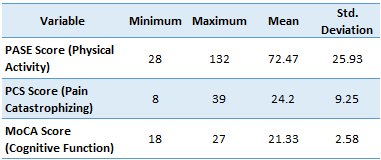
(Table 1)The mean PASE score was 72.47 ± 25.93 (range 28.00–132.00), indicating a moderate level of physical activity among pilot participants. The mean PCS score was 24.20 ± 9.25 (range 8.00–39.00), reflecting a moderate level of pain catastrophizing. The mean MoCA score was 21.33 ± 2.58 (range 18.00–27.00), indicating the presence of mild cognitive impairment in the majority of pilot participants.
Table 2: Categorical Distribution of Physical Activity and Cognitive Status – Pilot Sample (n = 15).
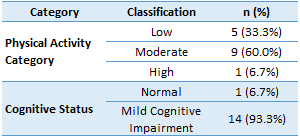
(Table 2) The categorical distribution of physical activity and cognitive status of the 15 participants showed that 60.0% (n = 9) fell into the Moderate physical activity category, 33.3% (n = 5) into the Low category, and 6.7% (n = 1) into the High category. With respect to cognitive status, 93.3% (n = 14) of participants demonstrated mild cognitive impairment, and 6.7% (n = 1) demonstrated normal cognition; no participant in this pilot sample fell into the moderate cognitive impairment category.
Normality and correlation analysis: Shapiro–Wilk testing confirmed a normal distribution for PASE scores (W = 0.966, p = 0.790), PCS scores (W = 0.965, p = 0.781), and MoCA scores (W = 0.933, p = 0.301) in the pilot sample, supporting the use of Pearson’s correlation coefficient for all three pairwise correlations.
Table 3: Correlation between Physical Activity and Pain Catastrophizing – Pilot Sample (n = 15).
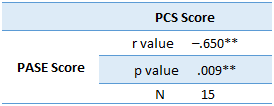
(Table 3)A strong, statistically significant negative correlation was observed between physical activity and pain catastrophizing (r = –0.650, p = 0.009), indicating that pilot participants with higher physical activity tended to report markedly lower pain catastrophizing; physical activity accounted for approximately 42.3% of the variance in pain catastrophizing scores (r² = 0.423) in this pilot sample.
Table 4: Correlation between Physical Activity and Cognitive Function – Pilot Sample (n = 15).
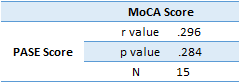
(Table 4)A weak positive correlation was observed between physical activity and cognitive function (r = 0.296, p = 0.284); pilot participants with higher physical activity tended to show marginally better cognitive performance, but this association did not reach statistical significance, and physical activity accounted for approximately 8.8% of the variance in MoCA scores (r² = 0.088).
Table 5: Correlation between Pain Catastrophizing and Cognitive Function – Pilot Sample (n = 15).
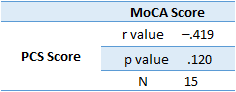
p < 0.05, statistically significant. ** p < 0.01, statistically significant. All correlations calculated using Pearson’s correlation coefficient; PASE, PCS, and MoCA scores were each normally distributed in the pilot sample (Shapiro–Wilk p > 0.05).
(Table 5)A moderate negative correlation was observed between pain catastrophizing and cognitive function (r = –0.419, p = 0.120) (; higher pain catastrophizing was associated with poorer cognitive performance in the expected direction, though this association did not reach statistical significance in the pilot sample, with pain catastrophizing accounting for approximately 17.5% of the variance in MoCA scores (r² = 0.175).
DISCUSSION
This pilot study was undertaken to determine the correlation of physical activity with pain catastrophizing and cognitive function among a randomly selected pilot subset of 15 community-dwelling older adults with chronic pain, drawn from a pool of 39 participants recruited for a planned main study, and to establish the feasibility of the recruitment procedure, outcome measures, and statistical analysis plan ahead of full-scale data collection. All three questionnaires were administered successfully within a single session of approximately 20–30 minutes, and no participant was unable to complete the assessment battery, supporting the feasibility of these procedures for the main study.
A statistically significant, strong negative correlation was observed between physical activity and pain catastrophizing in the pilot sample (r = –0.650, p = 0.009), indicating that participants with higher physical activity tended to report markedly lower levels of catastrophic thinking about their pain. This finding is consistent with Li et al., who reported that pain catastrophizing mediated the relationship between pain intensity and activity patterns among older adults with chronic musculoskeletal pain, with individuals demonstrating greater catastrophizing more likely to exhibit maladaptive activity behaviours and reduced participation in physical activity [16]. It is similarly consistent with Martinez-Calderon et al., who reported that increased pain catastrophizing was associated with poorer functional outcomes and greater disability in chronic musculoskeletal pain [17], and with Furrer and Walther, who emphasised that catastrophizing is strongly associated with pain-related fear, avoidance behaviours, emotional distress, and functional limitation [13]. Busse et al. similarly reported that higher catastrophizing was consistently associated with poorer outcomes and increased disability among individuals with chronic musculoskeletal pain [14]. From a behavioural perspective, physically active older adults may develop greater confidence in movement, improved self-efficacy, and reduced fear of pain-provoking activity, which may in turn reduce the likelihood of magnifying pain experiences or developing feelings of helplessness – offering a plausible explanation for the strong negative association observed in this pilot sample.
During administration of the PASE questionnaire, several pilot participants required prompting to recall routine physical activities performed over the preceding week; household activities such as sweeping, gardening, carrying groceries, and walking within the neighbourhood were often not initially recognised as physical activity. Participants reporting lower activity levels frequently described fear of aggravating pain, avoidance of prolonged walking, and reluctance to engage in recreational activity – observations consistent with the concept of pain catastrophizing, wherein exaggerated negative thoughts about pain may contribute to activity avoidance. These qualitative observations from the pilot phase will inform participant instructions during administration of the PASE in the main study.
A weak positive correlation was observed between physical activity and cognitive function in the pilot sample (r = 0.296, p = 0.284). Although not statistically significant, the direction of this association is consistent with the literature: Iso-Markku et al., in a systematic review and meta-analysis, reported that physically active older adults demonstrated a lower risk of cognitive decline and better cognitive performance than inactive individuals [26], and Dhahbi et al. similarly concluded that aerobic, resistance, and combined exercise interventions contribute to the preservation of cognitive function in older adults [27]. Sarkar et al. further highlighted the potential role of physical activity interventions in improving cognitive outcomes specifically among older adults experiencing both chronic pain and early cognitive decline [28]. The absence of statistical significance in the present pilot analysis most likely reflects the small sample size (n = 15), which limits statistical power considerably; this association will be re-examined with substantially greater power once the full sample of 39 participants has been analysed.
A moderate negative correlation was observed between pain catastrophizing and cognitive function (r = –0.419, p = 0.120), also in the expected direction but not statistically significant in this pilot sample. This is broadly consistent with theoretical models linking chronic pain, catastrophic pain-related cognition, and cognitive performance: Bushnell et al. described how chronic pain disrupts cognitive control mechanisms and the brain regions responsible for attention, memory, and executive function [18], and Moriarty et al. similarly concluded that persistent pain negatively influences attention, memory, and information-processing abilities [19]. Given the moderate effect size observed despite the small sample, this pilot finding is best interpreted as a promising, underpowered signal of a genuine association that warrants confirmation in a larger sample.
Limitations of the pilot study: As a pilot study, the present analysis has several limitations that should be considered when interpreting the findings. The pilot sample size of 15 participants is small, and correlational analyses conducted on such a small sample are subject to considerable sampling variability and limited statistical power; non-significant associations observed here should not be interpreted as evidence of no relationship, but rather as inconclusive given the sample size. Participants were recruited by convenience sampling for the main study pool, from which the pilot sample was subsequently drawn at random; findings may still not fully generalise to the wider older adult population and other geographical or cultural settings. Cognitive function was evaluated using the MoCA, a screening tool rather than a comprehensive neuropsychological assessment, and potential confounding factors such as educational status, socioeconomic status, sleep quality, medication use, depression, and anxiety were not controlled for in this pilot analysis.
CONCLUSION
Physical activity was significantly and strongly negatively correlated with pain catastrophizing in this pilot sample of older adults with chronic pain, indicating that participants who were more physically active tended to report markedly less catastrophic thinking about their pain. Physical activity showed a weak, positive but non-significant correlation with cognitive function, while pain catastrophizing showed a moderate, negative but non-significant correlation with cognitive function. Overall, these findings suggest that physical activity is meaningfully associated with lower pain catastrophizing, while its relationship with cognitive function, and the relationship between pain catastrophizing and cognitive function, remain directionally consistent with expectations but did not reach statistical significance in this sample.
Cite this article: Samuel S E, B. V Suresh, Vineetha PN. Correlation of Physical Activity with Pain Catastrophizing and Cognitive Function in Older Adults with Chronic Pain: A Pilot Study. Int J Physiother Res. 2026;14(4):5038–5049. DOI: 10.16965/ijpr.2026.146
References
- Treede RD, Rief W, Barke A, Aziz Q, Bennett MI, Benoliel R, et al. Chronic pain as a symptom or a disease: the IASP Classification of Chronic Pain for the International Classification of Diseases (ICD-11). Pain. 2019;160(1):19-27. https://doi.org/10.1097/j.pain.0000000000001384 PMid:30586067
- Domenichiello AF, Ramsden CE. The silent epidemic of chronic pain in older adults. Prog Neuropsychopharmacol Biol Psychiatry. 2019;93:284-290. https://doi.org/10.1016/j.pnpbp.2019.04.006 PMid:31004724 PMCid:PMC6538291
- Blyth FM, Noguchi N. Chronic musculoskeletal pain and its impact on older people. Best Pract Res Clin Rheumatol. 2017;31(2):160-168. https://doi.org/10.1016/j.berh.2017.10.004 PMid:29224694
- Saxena AK, Jain PN, Bhatnagar S. The prevalence of chronic pain among adults in India. Indian J Palliat Care. 2018;24(4):472-477. https://doi.org/10.4103/IJPC.IJPC_141_18 PMid:30410260 PMCid:PMC6199848
- Yadav R, Yadav RK, Kalia V. Association of pain and quality of life among middle-aged and older adults of India. Arch Gerontol Geriatr. 2023;104:104827.
- Asghar A, Sheikh N, Islam A. Socioeconomic variation in the prevalence of pain by anatomical sites among middle-aged and older adults in India: a cross-sectional study. BMC Geriatr. 2024;24(1):198. https://doi.org/10.1186/s12877-024-04780-1 PMid:38413878 PMCid:PMC10900751
- Potharaju SP, Sreedevi M. Determinants of chronic pain among adults in urban area of Udupi, Karnataka, India. Clin Epidemiol Glob Health. 2019;7(2):171-176. https://doi.org/10.1016/j.cegh.2018.03.002
- McPhee JS, French DP, Jackson D, Nazroo J, Pendleton N, Degens H. Physical activity in older age: perspectives for healthy ageing and frailty. Biogerontology. 2016;17(3):567-580. https://doi.org/10.1007/s10522-016-9641-0 PMid:26936444 PMCid:PMC4889622
- Geneen LJ, Moore RA, Clarke C, Martin D, Colvin LA, Smith BH. Physical activity and exercise for chronic pain in adults: an overview of Cochrane Reviews. Cochrane Database Syst Rev. 2017;1(1):CD011279. https://doi.org/10.1002/14651858.CD011279.pub2
- Niederstrasser NG, Attridge N, Meyre D. Associations between pain and physical activity among older adults. PLoS One. 2022;17(1):e0263356. https://doi.org/10.1371/journal.pone.0263356 PMid:35089966 PMCid:PMC8797193
- Sarikaya D, Halil M, Kuyumcu ME, Kilic MK, Yesil Y, Kara O, et al. Investigation of factors influencing low physical activity levels in community-dwelling older adults with chronic pain: a cross-sectional study. Sci Rep. 2023;13(1):14091. https://doi.org/10.1038/s41598-023-41319-7 PMid:37640818 PMCid:PMC10462701
- Sullivan MJL. Toward a biopsychomotor conceptualization of pain: implications for research and intervention. Clin J Pain. 2008;24(4):281-290. https://doi.org/10.1097/AJP.0b013e318164bb15 PMid:18427226
- Furrer M, Walther A. Pain catastrophizing: how far have we come. Brain Sci. 2024;14(5):444.
- Busse JW, Bartoszko J, Banfield L, Brunarski D, Burnie SJ, Connolly J, et al. A systematic review of pain catastrophizing and chronic musculoskeletal pain. J Pain. 2025;26(6):104724.
- Iwarsson E, Ekholm J, Nygård L, Josephsson S. Pain catastrophizing in older adults with chronic pain: the mediator effect of mood using a path analysis approach. J Clin Med. 2020;9(7):2073. https://doi.org/10.3390/jcm9072073 PMid:32630330 PMCid:PMC7408783
- Li X, Wang Y, Huang X, Lu H, Wang X, Zheng L. The relationship between pain intensity and pain-related activity patterns in older adults with chronic musculoskeletal pain: mediating roles of pain resilience and pain catastrophizing. J Pain Res. 2023;16:831-842. https://doi.org/10.2147/JPR.S393359 PMid:36925624 PMCid:PMC10013585
- Martinez-Calderon J, Jensen MP, Morales-Asencio JM, Luque-Suarez A. Pain catastrophizing and function in individuals with chronic musculoskeletal pain: a systematic review and meta-analysis. Clin J Pain. 2019;35(3):279-293. https://doi.org/10.1097/AJP.0000000000000676 PMid:30664551
- Bushnell MC, Ceko M, Low LA. Cognitive and emotional control of pain and its disruption in chronic pain. Nat Rev Neurosci. 2013;14(7):502-511. https://doi.org/10.1038/nrn3516 PMid:23719569
- Moriarty O, McGuire BE, Finn DP. The effect of pain on cognitive function: a review of clinical and preclinical research. Prog Neurobiol. 2011;93(3):385-404. https://doi.org/10.1016/j.pneurobio.2011.01.002 PMid:21216272
- Zhang X, Deng M, Liu S, Zhao Y, Fan Q, Yang Y. Evidence for cognitive decline in chronic pain: a systematic review and meta-analysis. Front Neurosci. 2021;15:737874. https://doi.org/10.3389/fnins.2021.737874 PMid:34630023 PMCid:PMC8492915
- Shi X, Chen Y, Shen M, Miao C, Shen S. The relationship between chronic pain and cognitive impairment in the elderly: a review of current evidence. J Pain Res. 2023;16:2309-2322. https://doi.org/10.2147/JPR.S416253 PMid:37441267 PMCid:PMC10335316
- Cruz-Almeida Y, Fillingim RB, Riley JL, Woods AJ, Porges E, Cohen R, et al. Pain and the Montreal Cognitive Assessment (MoCA) in aging. Pain Med. 2021;22(9):2006-2014. https://doi.org/10.1093/pm/pnab003 PMid:33718961 PMCid:PMC8346915
- Li X, Yin L, Li Y, Liu G, Zeng P, Zhang J. The association between bodily pain and cognitive impairment in community-dwelling older adults. Int J Environ Res Public Health. 2022;19(6):3285.
- Zhou Z, Hui ES, Kranz GS, Yung WH, Chang RC. Potential mechanisms underlying the accelerated cognitive decline in people with chronic low back pain: a scoping review. Ageing Res Rev. 2022;82:101767. https://doi.org/10.1016/j.arr.2022.101767 PMid:36280211
- Yuan J, Zhang Z, Wen H, Hong X, Hong Z, Qu Q, et al. Chronic pain and risk of cognitive impairment: a meta-analysis of longitudinal cohort studies. Transl Psychiatry. 2026;16:116. https://doi.org/10.1038/s41398-026-03924-8 PMid:41792103 PMCid:PMC12976088
- Iso-Markku P, Aaltonen S, Kujala UM, Kainulainen H, Waller K. Physical activity and cognitive decline among older adults: a systematic review and meta-analysis. JAMA Netw Open. 2024;7(2):e2354285. https://doi.org/10.1001/jamanetworkopen.2023.54285 PMid:38300618 PMCid:PMC10835510
- Dhahbi W, Ben Saad H, Guelmami N, Ceylan HI, Dergaa I. Physical activity to counter age-related cognitive decline: benefits of aerobic, resistance, and combined training - a narrative review. Sports Med Open. 2025;11:57. https://doi.org/10.1186/s40798-025-00857-2 PMid:40381170 PMCid:PMC12085549
- Sarkar S, Reid MC, Pillemer K, Henderson CR Jr, Luscher AO, Bhatt A, et al. Addressing the chronic pain-early cognitive decline comorbidity among older adults: protocol for the active brains remote efficacy trial. JMIR Res Protoc. 2023;12:e47319. https://doi.org/10.2196/47319 PMid:37768713 PMCid:PMC10570897
- Zhaoyang R, Martire LM, Darnall BD. Daily catastrophizing and physical activity. J Pain. 2020;21(3-4):352-361.
- Larsson C, Hansson EE, Sundquist K, Jakobsson U. Chronic pain in older adults: prevalence, incidence, and risk factors. Scand J Pain. 2017;15:55-62. https://doi.org/10.1080/03009742.2016.1218543 PMid:27885914
- Washburn RA, Smith KW, Jette AM, Janney CA. The Physical Activity Scale for the Elderly (PASE): development and evaluation. J Clin Epidemiol. 1993;46(2):153-162. https://doi.org/10.1016/0895-4356(93)90053-4 PMid:8437031 PMCid:PMC11925478
- D'Amore C, Lajambe L, Bush N, Hiltz S, Laforest J, Viel I, et al. Mapping the extent of the literature and psychometric properties for the Physical Activity Scale for the Elderly (PASE) in community-dwelling older adults: a scoping review. BMC Geriatr. 2024;24(1):761. https://doi.org/10.1186/s12877-024-05332-3 PMid:39277742 PMCid:PMC11401377
- Covotta A, Gagliardi M, Berardi A, Maggi G, Pierelli F, Mollica R, et al. Physical Activity Scale for the Elderly: translation, cultural adaptation, and validation of the Italian version. Curr Gerontol Geriatr Res. 2018;2018:8294568. https://doi.org/10.1155/2018/8294568 PMid:30224917 PMCid:PMC6129314
- Keikavoosi-Arani L, Salehi L. Cultural adaptation and psychometric adequacy of the Persian version of the Physical Activity Scale for the Elderly (P-PASE). BMC Res Notes. 2021;14(1):229.
- Ngai SP, Cheung RT, Lam PL, Chiu JK, Fung EY. Validation and reliability of the Physical Activity Scale for the Elderly in Chinese population. J Rehabil Med. 2012;44(5):462-465. https://doi.org/10.2340/16501977-0953 PMid:22549657
- Lajambe L, D'Amore C, Bush N, Hiltz S, Laforest J, Beauchamp MK. Normative values for the physical activity scale for the elderly in community-dwelling men and women 45 to 85 years old: an analysis from the CLSA. Int J Behav Nutr Phys Act. 2025;22(1):34. https://doi.org/10.1186/s12966-025-01820-w PMid:41088431 PMCid:PMC12522245
- Sullivan MJL, Bishop SR, Pivik J. The Pain Catastrophizing Scale: development and validation. Psychol Assess. 1995;7(4):524-532. https://doi.org/10.1037/1040-3590.7.4.524
- Osman A, Barrios FX, Gutierrez PM, Kopper BA, Merrifield T, Grittmann L. The Pain Catastrophizing Scale: further psychometric evaluation with adult samples. J Behav Med. 2000;23(4):351-365. https://doi.org/10.1023/A:1005548801037 PMid:10984864
- Leung L. Pain catastrophizing: an updated review. Indian J Psychol Med. 2012;34(3):204-217. https://doi.org/10.4103/0253-7176.106012 PMid:23441031 PMCid:PMC3573569
- Mathis MB, Nobre NA, Carvalho CRF, Saito JH, Reis FJJ. Measurement precision of the Pain Catastrophizing Scale and its short forms in chronic low back pain. Sci Rep. 2022;12(1):11814. https://doi.org/10.1038/s41598-022-15522-x PMid:35835830 PMCid:PMC9283330
- Abu-Saad Huijer H, Fares S, French DJ. The development and psychometric validation of an Arabic-language version of the Pain Catastrophizing Scale. Pain Res Treat. 2017;2017:1472792. https://doi.org/10.1037/t61440-000 PMCid:PMC5278223
- Chin WC, Woo A, Lee WP, Chan T, Wong VW, Cheung CW. The Pain Catastrophizing Scale-short form: psychometric properties and threshold for identifying high-risk individuals. J Pain. 2019;20(8):942-952. Nasreddine ZS, Phillips NA, Bédirian V, Charbonneau S, Whitehead V, Collin I, et al. The Montreal Cognitive Assessment, MoCA: a brief screening tool for mild cognitive impairment. J Am Geriatr Soc. 2005;53(4):695-699. https://doi.org/10.1111/j.1532-5415.2005.53221.x PMid:15817019
- Nasreddine ZS, Phillips NA, Bédirian V, Charbonneau S, Whitehead V, Collin I, et al. The Montreal Cognitive Assessment, MoCA: a brief screening tool for mild cognitive impairment. J Am Geriatr Soc. 2005;53(4):695-699. https://doi.org/10.1111/j.1532-5415.2005.53221.x PMid:15817019
- Ciesielska N, Sokolowski R, Mazur E, Podhorecka M, Polak-Szabela A, Kedziora-Kornatowska K. Is the Montreal Cognitive Assessment (MoCA) test better suited than the Mini-Mental State Examination (MMSE) in mild cognitive impairment (MCI) detection among people aged over 60? Meta-analysis. Psychiatr Pol. 2016;50(5):1039-1052. https://doi.org/10.12740/PP/45368 PMid:27992895
- Carson N, Leach L, Murphy KJ. A re-examination of Montreal Cognitive Assessment (MoCA) cutoff scores. Int J Geriatr Psychiatry. 2018;33(2):379-388. https://doi.org/10.1002/gps.4756 PMid:28731508
- Suchy-Dicey AM, Vo TT, Oziel K, King R, Barbosa-Leiker C, Rhoads K, et al. Psychometric reliability, validity, and generalizability of MoCA in American Indian adults: the Strong Heart Study. J Alzheimers Dis. 2024. https://doi.org/10.1177/10731911241261436 PMid:39046194 PMCid:PMC12053832