Correlation Between Gross Motor Skills and Cognitive Development In Preschoolers Born During Pandemic: A Cross-Sectional Study
Mithi Jain, Ashwini Patole · Int J Physiother Res 2026;14(4):5030–5037
1 K J Somaiya College of Physiotherapy, Mumbai, Maharashtra, India.
2 Assistant Professor at Cardiorespiratory Department, K J Somaiya College of Physiotherapy, Mumbai, Maharashtra, India.
Corresponding Author: Mithi Jain, K J Somaiya College of Physiotherapy, Mumbai, Maharashtra, India. · mithijain06@gmail.com
Abstract
Background
The first five years of a child’s life are essential for growth. During this period, children develop rapidly in many areas; however, these five years are a critical window for the growth of motor and cognitive abilities. Rather than developing in isolation, gross motor ability and cognitive growth are mutually dependent — together they lay the groundwork for a child's physical independence and capacity to learn. Research supports this relationship by showing shared neural pathways that govern both motor and cognitive functions. Gross motor skills enable children to navigate their neighbourhood, take part in play, and interact socially, while also influencing cognitive functions such as attention, memory, and executive functioning. COVID-19-related restrictions limited children’s opportunities for movement, play, and social learning during this vital developmental period, potentially affecting both. Given this, examining how motor skills relate to cognitive growth among preschoolers (aged 3-5 years) born during the pandemic is essential—such work can help flag children showing signs of developmental delay and inform more targeted, timely intervention.
Methods
The study employed a correlational study structure with cross-sectional study type to evaluate how gross motor skills would correlate with their cognitive development for preschoolers born during COVID-19. The study was conducted in community settings, including nursery schools and playschools, to ensure access to preschool-aged children. Participants included children between 3 and 5 years of age, all born during the COVID-19 pandemic period, at the preschool stage of development. The data were collected and compiled into a master chart in Microsoft Excel, then analysed using GraphPad software. For testing of normality, the Shapiro-Wilk test was used, and Spearman's rank correlation (ρ) was applied as a non-parametric method to quantify gross motor skills and cognitive development relationships.
Results
Gross motor scores were consistent across age groups, with only small improvements, while cognitive scores increased more noticeably with age. To analyse the relationship between the two areas, and because the data did not meet a normal distribution, Spearman’s rank correlation was applied. The analysis found a coefficient of 0.3968 and a p-value of 0.029, which indicates a moderate and statistically significant link between the two domains.
Conclusion
This study shows a clear and meaningful connection between cognition and motor abilities, particularly in children born during the pandemic. It indicates that these develop in a simultaneous and connected process and that these two areas of development support and influence each other. The results clearly highlight the importance of structured interventions and preschool educational programs that support children's physical and cognitive growth. These findings also support ongoing evaluation and intervention to ensure that children's development is not harmed by the challenges of growing up during a pandemic.
BACKGROUND
The formative years are a time of remarkable development. Children grow rapidly in many ways, including gross motor, fine motor, language and communication, and cognitive skills. While these dimensions of development may be different, they are also interdependent and integrated in shaping the child’s way towards health, growth and self-sufficiency. Out of these domains, gross motor and cognition are the most relevant. They serve as the foundation of physical independence and contribute to higher-order thinking and problem solving.
Gross motor skills include foundational movement patterns such as sitting, standing, walking, running, and jumping that depend on coordinated use of the body’s large muscle groups[1]. Motor skills also provide opportunities for children to both interact with their environment, as well with others, and engage in play, which are all contributors to cognitive development. On the opposite, cognitive development involves acquiring knowledge, skills, problem solving strategies, memories, and executive functions. It offers a more holistic and complex way of thinking about children’s learning and interplay with their environments.Play, movement, and social contexts play vital roles in integrating motor and cognitive development Playful movements provide children with opportunities to explore movement, practice problem-solving, and engage in goal-directed behaviours. Research has shown that physical activity can activate the hippocampus and prefrontal cortex, which are brain areas integral to memory, attention, and executive function; thus reinforcing the neurobiological basis for the link between the motor and cognition.
The significance of motor activity for cognitive development is clearly reflected in developmental psychology, particularly in theory of cognitive growth. Theory identifies the sensorimotor stage (birth to two years) as an age in which knowledge is developed through physical contact with the environment. For Piaget, motor activity represents an important foundation and not simply a reflection of development – it is the basis for thinking. The notion that “thinking comes from movement” still remains an essential part of our understanding of how we understand the interconnected development of motor skills and mental abilities [1].
Even though development is deeply interconnected with environmental factors, disruptions to these conditions can significantly impact children’s growth. In March 2020 , COVID 19 pandemic brought about extreme changes to children’s daily lives. Following several months of lockdown, children had experienced school closures, daycare closures, and limited access to both paid and free parks. These limitations subsequently affected children’s ability to move, be physically-active, and experience social learning through play with their peers [2] .These limitations likely contributed to delays in motor milestones, decreased physical fitness, and decreased stimulation for cognitive development. For preschool-aged children—in an already sensitive stage of core skill development—this pandemic could potentially be leading to a development gap that may have lasting impacts.
Prior studies have found relations between motor and cognitive domains, some with positive relations; while others noted contextual factors such as socioeconomic status, parental involvement (especially those with developing children), and the presence of stimulating environments could be possible mediators. For example, prior exposure to formal learning opportunities, time spent engaging with educational programming on screens, and available interaction from parents with their children during the pandemic may have acted as a means of cognitive stimulation. These compensatory processes may have offset developmental opportunities of cognition with limited experience of gross motor, and thereby determining the magnitude or strength or direction of the relation between the two domains .
Considering these factors it is important and timely to assess the association between both domains in preschoolers who were born at the time of the pandemic. By examining the association we may gain a better understanding of developmental delays, promote early screening and intervention methods, and promote parents, teachers and community leaders to develop environments that encourage both movement and learning.
METHODOLOGY
Research Design and Type: The study employed a correlational study structure with cross-sectional study type to evaluate how gross motor skills would correlate with their cognitive development for preschoolers born during COVID-19.
Research Setting: The study was conducted in community settings, including nursery schools and playschools, to ensure access to preschool-aged children.
Research Population: Participants included children between 3 and 5 years of age, all born during the COVID-19 pandemic period, at the preschool stage of development.
Sampling Technique and Sample Size: The sample of this study was identified using a convenience sampling method. 30 preschool children that fit within the inclusion criteria were chosen as participants of the current study.
Inclusion Criteria: 1) Children aged 3–5 years (preschoolers) born during the COVID-19 pandemic 2) Parents or guardians capable of understanding and communicating in English
Exclusion Criteria: 1) Children diagnosed with developmental delays, cerebral palsy, or intellectual disability 2)Children with physical disabilities, including muscular dystrophy or congenital musculoskeletal conditions such as Congenital Talipes Equinovarus (CTEV), Congenital Dislocation of the Hip (CDH), or scoliosis
Tools and Materials: Ages and Stages Questionnaire (ASQ) – Gross Motor component, used to examine gross motor development, Modified Mini-Mental Scale (MMMS) used to assess cognitive function.
Procedure: Approval from the Institutional Research Board (IRB) was obtained, and participants were recruited based on inclusion and exclusion criteria. Parents or guardians of participating children provided written consent before their child could take part in the research study. For data collected in nursery or playschool settings, we requested formal consent from the relevant institutional authority. We used the ASQ Gross Motor section to assess gross motor skills. The questions in this section vary according to the child’s age category (3, 4, or 5 years), according to established ASQ guidelines. The gross motor component for the 3-year-old (36 months) category contained six appropriate tasks that assess functional motor skills. The tasks included: (a) Kicking a ball using the leg for forward propulsion only and without any external support; (b) Jumping with both feet taking off together; (c) Climbing upstairs placing one foot on each step and using or not using the railing for support; (d) Standing on one foot for 1 second or longer without any support; (e) Throwing a ball over their head from a standing position by extending their arm upward and throwing the ball forward; (f) Jumping forward a distance of 6 inches or more while both feet were off the ground. For the 4-year-old group of children (48 months), the Gross Motor Skills part of the ASQ consisted of six developmental questions. These questions covered the topic of catching a large ball with both hands; climbing the steps of the ladder in the sort-of-slides found in playgrounds and sliding down alone; throwing the ball upwards when standing facing the person,minimum of six feet away; hopping up and down with the right or left foot, at least once without losing balance; moving forward in one jump about 20 inches from the standing position with feet together; and standing on one foot for at least five seconds with support or balance. For children in the 5-year age group (60 months), the gross motor part included six items of balance, coordination, and motor planning. These included the ability to throw a ball overhand and hit a target or a person at a suitable distance, catch a large ball in both hands, hop forward on single leg for few seconds without losing balance, hop forward on both legs for a span of about 24 inches with feet alongside each other, the ability to stand on one foot for more than 10 seconds without support or losing balance, and skipping in a rhythmic motion using alternate feet. For each item, caregivers selected one of three response options — Yes, Sometimes, or Not yet — which the ASQ converted into a numeric score (Yes = 10, Sometimes = 5, Not yet = 0). The total score from all items was then used to develop a gross motor skill total for each child, which was then compared against age-specific ASQ cut-off values to determine if a child’s score was at, above or below the ASQ cut-off value and therefore typical, should be monitored or require further assessment, respectively [3].
Cognitive assessment was performed using a scale and took place through an interview method to ensure clear understanding and accurate responses. The Modified MMSE is an individual assessment used to evaluate several domains, including Attention, Orientation, Attention & Concentration, Registration, Recall, and Language. To assess orientation, we evaluated three dimensions. First, the child identified themselves (Sex, First Name, Last Name) and recognised their parent/grandparent, with 1 point per correct response (4 total points possible for this dimension). Secondly, the child was asked to identify his/her location (Place, City, State and Country) and received 1 point per correct response (4 total points possible). Finally, they were tested on time by naming the day, date, month, and year, earning 1 point for each correct answer (4 points total). Concentration and attention were measured using digit span tasks. In digits forward, participants used 2 to 5 digits, and one mark was given for each correct answer (maximum score of 4). In digits backwards, the minimum number of digits used was 2 to 4, and one mark was given for a correct answer (maximum score of 3). Registration and perceptual awareness were assessed by having the child point to three familiar objects, awarding one point for each correctly named object (maximum 3 points). Recall was measured by having the child recall the three objects called out earlier, with one point assigned per recalled object (maximum = 3 points). To assess language functions, several tasks were conducted. Body part naming was assessed by asking the child to name their body parts. This task was worth five points. Understanding and implementation of commands were checked by asking the child to unwrap a toffee, hand over the toffee paper to the examiner, and finally consume the toffee. For each task accomplished, one mark was given (maximum score: 3). For assessing the ability to repeat the statement, the child had to repeat the statement ‘Billi doodh peeti hai’. For this task, one mark was given. Reading and writing skills were checked by asking the child to read and write their name. One mark was given for each task. To assess the child’s visual-spatial skills, the task included copying the design of a circle. One mark was given for this task. The scores from all domains were summed to arrive at the total Modified MMSE score. The total score was then interpreted against the cut-off values to indicate whether it was within normal limits or below the cut-off [4].
All collected data were systematically gathered, properly recorded, and analyzed with suitable methods to evaluate how the participants’ gross motor skills relate to cognitive development.
Statistical Analysis: The data were collected and compiled into a master chart in Microsoft Excel, then analysed using GraphPad software. For testing of normality, the Shapiro-Wilk test was used, and Spearman’s rank correlation (ρ) was applied as a non-parametric method to quantify gross motor skills and cognitive development relationships.
RESULTS AND DISCUSSION
Participant Characteristics: The study included 30 children aged 3 to 5 years. Gross motor abilities were measured using the Ages and Stages Questionnaire (ASQ). Cognitive development was assessed with the Modified Mini-Mental State Examination (MMSE).
Test Normality – The Shapiro–Wilk test was applied to check normality; results indicated that the assumption of normality was not met (W = 0.9275, p = 0.0423). The Normal QQ plot further supported this, showing deviations from the line of normality. Based on these findings, Spearman’s rank coefficient was applied for further analysis. [Refer to Fig. 1]
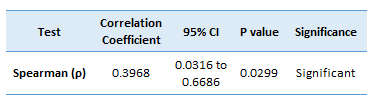
Correlation Analysis- As the data did not meet the assumption of normal distribution, Spearman’s rank correlation was applied instead. The result was significant (ρ = 0.3968, 95% CI = 0.0316 to 0.6686, p = 0.0299). This means children with better motor skills also tended to have higher cognitive scores. [Refer to Table 1]
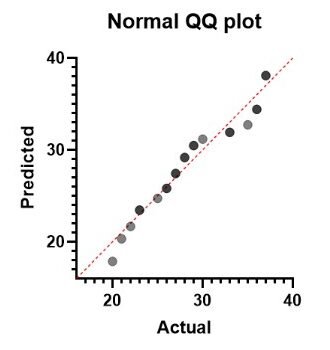
Fig. 1: Normal QQ plot
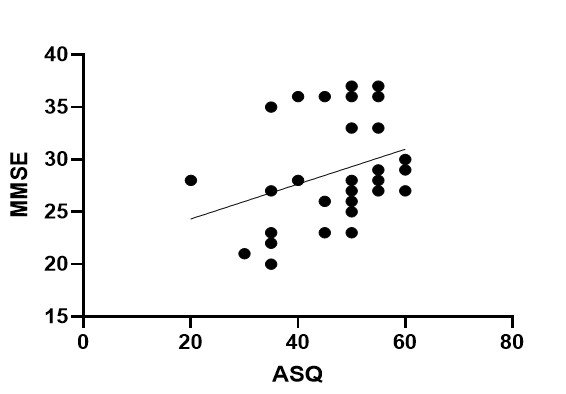
Fig. 2: MMSE and ASQ relation.
Inference – Scatter plot showing the relation between both domains in preschool children. Each point represents an individual participant. The line indicates a linear trend fitted for visualization purposes
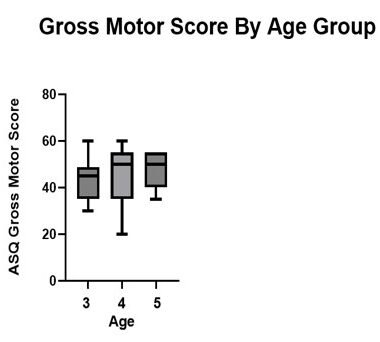
Fig. 3: Gross motor score by age group.
Inference – Figure 3 presents the distribution of ASQ gross motor scores among children aged 3, 4, and 5 years. Median scores across the three age groups were relatively comparable, clustering around the mid-40s, with a slight upward shift noted with increasing age. Variability was greatest in the 4-year group, as reflected by a wider interquartile range, while both the 3- and 4-year groups showed a few children with considerably lower scores than their peers.
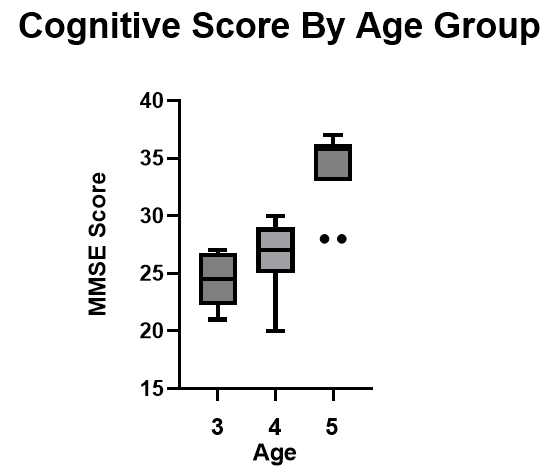
Fig. 4: Cognitive score by age group.
Inference – depicts MMSE scores across the same age groups. Unlike gross motor scores, cognitive growth showed a clear upward trend with age. Median MMSE scores were lowest in 3-year-olds, slightly higher in 4-year-olds, and highest in 5-year-olds. Variability was greater in the 3- and 4-year groups, whereas the 5-year group demonstrated consistently higher scores with a narrower range, indicating more uniform performance. A few outliers were noted in the 5-year group, though the overall pattern strongly suggests progressive cognitive improvement with age
Table 1: Correlation between gross motor skills and cognitive development.
DISCUSSION
The study explores the relationship between motor abilities and cognition in preschoolers aged 3-5 years, born during the pandemic. The findings were that gross motor scores remained relatively stable across age groups, with only slight increases, whereas cognitive scores demonstrated a clearer upward trend with age. We used Spearman’s rank correlation because the data were not normally distributed. The results showed a coefficient of 0.3968 and a p-value of 0.029, reflecting a moderately significant link between the two domains.
The findings further support the literature pointing to the mutual dependence between these domains in early childhood. Existing research has shown a positive correlation [1,5,6]. Several explanations exist for this link. Developmentally, both domains appear to progress along comparable trajectories, with the steepest gains occurring in early childhood [1]. Neurobiological evidence adds further support—imaging studies point to overlapping activation patterns during motor and cognitive tasks, particularly involving the cerebellum and prefrontal cortex [7]. Rather than operating through entirely separate circuits, these regions appear to co-activate regardless of whether the task is primarily motor or cognitive. The neuromuscular demands of gross motor tasks, such as hopping, require continuous motor control and regulation, processes that rely heavily on feedback-control mechanisms. These mechanisms are believed to activate multiple areas of the central nervous system. This shared brain activation might explain why gross motor skills and attention control are linked. Attention control is an important part of thinking and learning [6]. Studies show that 4- to 6-year-old children who are more physically fit based on overall fitness scores tend to have better focus and attention [6]. Experts also think both large (gross) and small (fine) motor skills contribute to children’s emotional and social development. Many reports suggest that focusing more on these motor skills in preschool could support better emotional development, social skills, and school performance [6].
When interpreting the present findings, the impact of widespread community health restrictions during this pandemic cannot be ignored. The environment in which children learn, grow, and play plays a fundamental role in shaping who they become, and the pandemic has fundamentally transformed child health. For the most part, children have avoided the worst direct health effects; however, they have also been affected by health and safety policies that led to the shutdown of daycare centres, schools, and playgrounds [2].
Day care centres, schools and playgrounds are vital for early childhood development, enhancing cognitive, social, emotional and physical growth through a stimulating environment that encourages learning, cooperation, self-confidence, and healthy physical development. These settings allow children to interact with one another and adults, learn life skills, and develop crucial motor skills through play-based activities. Restrictions on outdoor activities, opportunities for free play, and reduced peer interaction during critical developmental years may have impacted both gross motor and cognitive outcomes.
Interestingly, the study found only a moderate positive correlation between gross motor skills and cognitive development. This implies that although gross motor competence influences cognitive outcomes, other factors come into play.
Additionally, variables such as parental involvement, the nature of the home setting, and alternative learning avenues—including homeschooling or guided activities accessed via digital and social media platforms—could have contributed meaningfully to the outcomes observed. Parenting includes the ongoing support of a child’s physical, emotional, mental, and social growth. Various aspects of parenting behaviour, including instructional quality, attentiveness, awareness, physical caregiving, fostering cognitive growth, and parent-child engagement, have been shown to be closely linked to children’s cognitive outcomes [8]. Online platforms combined with teacher-led strategies may have played a supportive role in sustaining and strengthening cognitive abilities during this period. Educators and Parents adapted by preparing and delivering materials that continued to stimulate students’ cognitive growth [9]. Studies also show that cognitive skills continue to improve with age independently of early motor competence [10].
These factors can be further explained through the scores, statistical evaluations, and their respective graphical representations. The box-and-whisker plots provided a clear visual representation of scores across each age group. The IQR also showed that most children’s scores clustered in a consistent band, and the median steadily increased with each age group. This suggested that not only did the central tendency of cognitive scores increase with age, but that the distribution also shifted upwards. The older group showed fewer extreme outliers for their ages, providing additional evidence that developmental stability increases with age. When comparing gross motor and cognitive score variability, cognitive scores increased more consistently across age groups, while gross motor scores showed greater variability in range. While some variability may reflect individual differences, it may also reflect the unique period of COVID-19, when free play and physical activity were much more limited than parent- or educator-mediated cognitive engagement. Cognitive development seems to have been influenced more consistently by age, whereas gross motor development may have demonstrated broader individual variation. So the box-and-whisker displays not only corroborated the statistics, but also more clearly showed how age and environmental influences jointly contribute to outcomes.
Overall, this study shows that although motor and intellectual capabilities are related, their developmental patterns do not always go hand in hand. Chronological age consistently predicted cognitive growth, with older children having higher cognitive scores independent of gross motor age. In contrast, gross motor outcomes showed greater variability, which we attribute to the unique pandemic context, where opportunities for physical skills were reduced, while cognitive stimulation could still be supported through structured home- and school-based activities. The findings reinforce the relationship between biological maturation and environmental experience, suggesting that both intrinsic (biological) and extrinsic (environmental) factors contribute to growth trajectories. While it provides useful insight into this connection, it also raises important questions for future research. This study shows that age reliably contributes to cognitive advancement, while fluctuations in the motor findings should motivate further inquiry into how surrounding factors, including the limited activities allowed during the pandemic, may influence development. This suggests that planned interventions should nurture both domains together, so children in the early years receive balanced support. This discussion has outlined key trends and considerations, and it now transitions to the concluding note, where the broader implications and meaning of these findings will be discussed.
CONCLUSION
This study’s findings, drawn from children born in the pandemic era, point to a link between gross motor skills and cognitive functioning that reached statistical significance. The data showed a positive relationship in which improved motor abilities typically coincided with cognitive improvements, suggesting that motor and cognitive growth develop in a simultaneous, connected process.
Age was an important independent effect in this research, as cognitive scores increased, regardless of motor growth. Both maturation and newly learned skills are contributors to cognitive, physical, and overall development in these preschool children. It reinforces the case for proactive intervention strategies and structured preschool programs that simultaneously support a child’s well-being. Educators, parents, and healthcare professionals can accomplish this through designing and engaging children in activities that require movement combined with problem-solving. It also supports the ongoing evaluation and intervention needed to ensure a child’s long-term development is not negatively affected by their formative years occurring during a pandemic.
ABBREVIATIONS
ASQ – Ages and Stages Questionnaire
Mod. MMSE – Modified Mini Mental Scale
CTEV – Congenital Talipes Equinovarus
CDH – Congenital Dislocation of Hip
IRB – Institutional Research Board
Author’s contributions
Mithi Jain – Conceptualisation and study framework, data collection, analysis and interpretation and drafting of the manuscript. Ashwini Patole – Contributed to the methodological direction of the study and was involved in interpreting the findings. Each author critically reviewed the manuscript for significant intellectual input and approved the final version for submission.
Acknowledgements
I would like to thank Dr. Ashwini, who co-authored this manuscript, for her valuable guidance, support, and feedback throughout the research work. I also appreciate the input and suggestions from KJ Somaiya College of Physiotherapy and its Institutional Review Board (IRB). I am thankful to the parents and guardians for consenting to participate in this research study with their children. In addition, I would like to thank Little Saints Kindergarten for allowing us to conduct this research study on their premises and for their contribution to the data collection process.
Cite this article: Mithi Jain, Ashwini Patole. Correlation Between Gross Motor Skills and Cognitive Development In Preschoolers Born During Pandemic: A Cross-Sectional Study. Int J Physiother Res. 2026;14(4):5030–5037. DOI: 10.16965/ijpr.2026.118
References
- Veldman SLC, Santos R, Jones RA, Sousa-Sá E, Okely AD. Associations between gross motor skills and cognitive development in toddlers. Early Hum Dev. 2019 May;132:39-44. https://doi.org/10.1016/j.earlhumdev.2019.04.005 PMid:30965194
- Deoni SC, Beauchemin J, Volpe A, Dâ Sa V; RESONANCE Consortium. The COVID-19 Pandemic and Early Child Cognitive Development: A Comparison of Development in Children Born During the Pandemic and Historical References. medRxiv [Preprint]. 2022 Aug 16:2021.08.10.21261846. https://doi.org/10.1101/2021.08.10.21261846
- Fauls JR, Thompson BL, Johnston LM. Validity of the Ages and Stages Questionnaire to identify young children with gross motor difficulties who require physiotherapy assessment. Dev Med Child Neurol. 2020 Jul;62(7):837-844. https://doi.org/10.1111/dmcn.14480 PMid:32043571
- Jain M, Passi GR. Assessment of a modified Mini-Mental Scale for cognitive functions in children. Indian Pediatr. 2005 Sep;42(9):907-12.
- Cheung WC, Shen S, Meadan H. Correlation between motor, socio-emotional skills, and academic performance between young children with and without disabilities. J Dev Phys Disabil. 2022 Apr;34(2):211-31. Epub 2021 Apr 27. https://doi.org/10.1007/s10882-021-09796-8 PMCid:PMC10824449
- Wick K, Kriemler S, Granacher U. Associations between measures of physical fitness and cognitive performance in preschool children. BMC Sports Sci Med Rehabil. 2022 May 1;14(1):80. https://doi.org/10.1186/s13102-022-00470-w PMid:35501890 PMCid:PMC9063064
- Diamond A. Close interrelation of motor development and cognitive development and of the cerebellum and prefrontal cortex. Child Dev. 2000 Jan-Feb;71(1):44-56. https://doi.org/10.1111/1467-8624.00117 PMid:10836557
- Lanjekar PD, Joshi SH, Lanjekar PD, Wagh V. The Effect of Parenting and the Parent-Child Relationship on a Child's Cognitive Development: A Literature Review. Cureus. 2022 Oct 22;14(10):e30574. https://doi.org/10.7759/cureus.30574 PMid:36420245 PMCid:PMC9678477
- Wahyuningrum T, Sa'diya LK. Impact of learning from home: cognitive development of early childhood education student in pandemic Covid-19. Jurnal Obsesi J Pendidikan Anak Usia Dini. 2022;6(5):5271-9. https://doi.org/10.31004/obsesi.v6i5.2825
- Piek JP, Dawson L, Smith LM, Gasson N. The role of early fine and gross motor development on later motor and cognitive ability. Hum Mov Sci. 2008 Oct;27(5):668-81. https://doi.org/10.1016/j.humov.2007.11.002 PMid:18242747
- Li Q, Wang Q, Xin Z, Gu H. The Impact of Gross Motor Skills on the Development of Emotion Understanding in Children Aged 3-6 Years: The Mediation Role of Executive Functions. Int J Environ Res Public Health. 2022 Nov 10;19(22):14807. https://doi.org/10.3390/ijerph192214807 PMid:36429524 PMCid:PMC9690058
- Byrne S, Sledge H, Franklin R, Boland F, Murray DM, Hourihane J; CORAL Study group. Social communication skill attainment in babies born during the COVID-19 pandemic: a birth cohort study. Arch Dis Child. 2023 Jan;108(1):20-24. https://doi.org/10.1136/archdischild-2021-323441 PMid:36220496 PMCid:PMC9763171