Correlation Between Forward Head Posture and Lumbar Core Strength in Computer Users: A Cross-Sectional Study
Sanket S. Nagrale , Nilima Bedekar · Int J Physiother Res 2026;14(4):5025–5029
1 Department of Musculoskeletal Physiotherapy, Sancheti Institute College of Physiotherapy, Pune, Maharashtra, India.
2 Department of Musculoskeletal Physiotherapy, Sancheti Institute College of Physiotherapy, Pune, Maharashtra, India.
Corresponding Author: Dr. Sanket S. Nagrale, MPT, PhD, Department of Musculoskeletal Physiotherapy, Sancheti Institute College of Physiotherapy, Pune, Maharashtra, India. · nagralesanket@gmail.com
Abstract
Forward head posture (FHP) is commonly observed in people who spend prolonged periods working at a computer. Changes in cervical alignment may be associated with changes in trunk muscle function. This study examined the relationship between craniovertebral (CV) angle and transversus abdominis (TrA) strength in computer users. Computer users with FHP had lower CV angles and lower TrA strength than those with normal head posture. The observed association between CV angle and TrA strength supports consideration of both cervical posture and trunk muscle function during physiotherapy assessment.
BACKGROUND
Forward head posture (FHP) is characterized by anterior positioning of the head relative to the trunk. It has been described in association with altered cervical alignment and changes in cervical muscle performance. Watson and Trott reported an association between natural head posture and upper cervical flexor muscle performance [1,2].
Postural abnormalities involving the cervical and shoulder regions have also been reported in healthy individuals [3,4]. Computer-based work may place individuals in sustained seated positions, and differences in head and neck posture have been observed among office workers. Szeto et al. compared neck and shoulder posture in symptomatic and asymptomatic office workers and demonstrated differences in posture during office work [5]. Marwaha and Kolke also examined core stability training in computer professionals with cervical strain using photographic assessment of forward head posture [6].
Head and neck posture is influenced by the position of other spinal regions. Caneiro et al. found that different thoracolumbar sitting postures were associated with differences in head and neck posture and cervicothoracic muscle activity [7]. This supports the clinical concept that posture should not be considered only at the cervical region.
The transversus abdominis (TrA) is an important component of the deep trunk musculature and contributes to lumbopelvic stabilization. The relationship between cervical posture and trunk muscle characteristics has also been examined in more recent work. Kang et al. reported a significant association between craniovertebral angle and TrA muscle thickness in individuals with forward head posture [8].
Despite these observations, the relationship between a clinically measured craniovertebral angle and TrA strength in computer users has received relatively limited attention. Therefore, the present study was undertaken to determine the relationship between craniovertebral angle and TrA strength among computer users.
METHODS
Study design and setting: A cross-sectional correlational study was conducted as part of a postgraduate dissertation at Sancheti Institute College of Physiotherapy, Pune. Data were collected from software professionals working in various information technology companies in Pune, Maharashtra, India.
Participants: A total of 200 computer users aged 20–30 years were included. Participants had been working on a computer for more than 6 hours per day for at least 1 year. They were classified into two groups according to craniovertebral angle: normal head posture (NHP; n = 100) and forward head posture (FHP; n = 100).
Inclusion criteria
• Computer professionals aged 20–30 years.
• At least 1 year of computer-based work for more than 6 hours per day.
• Participants of either sex.
• Participants free from neck or low-back pain for at least 1 week before assessment.
Exclusion criteria
• Current neck or low-back pain.
• History of spinal trauma, surgery, or congenital deformity.
• Neurological involvement.
• Pregnancy.
Ethical approval and informed consent: Ethical clearance for the study was obtained from the ethics committee of Sancheti Institute College of Physiotherapy. All participants provided written informed consent before data collection.
Outcome measures
Craniovertebral angle: Forward head posture was assessed using the craniovertebral (CV) angle. Lateral-view digital photographs were taken using a Nikon Coolpix 10 MP camera. Reflective markers were placed on the tragus of the ear and the spinous process of C7. The angle was analyzed using MB Ruler software. Participants with a CV angle of 47°–55° were classified as having normal head posture, whereas a CV angle below 47° was classified as forward head posture.
Transversus abdominis strength: TrA activation was assessed using an aneroid sphygmomanometer as a pressure biofeedback unit, following the procedure described in the original study. The pressure cuff was placed under the abdomen with the participant in prone lying and inflated to 70 mmHg. Participants were instructed to draw in the abdominal wall during expiration and maintain the contraction for 10 seconds. A pressure decrease of 4–10 mmHg was considered optimal TrA activation. Strength was graded from 0 to 5 according to the degree of pressure reduction and the ability to maintain the contraction [9]. (Table 1).
GRADINGS OF TRANSVERSUS ABDOMINIS STRENGTH (based on Richardson method)
Table 1: Grading of transversus abdominis strength.

Grades Interpretation
0 No Palpable Contraction of Muscle.
1 Able to hold the contraction for 5 seconds with decrease in pressure for 0-2 mmhg.
2 Able to hold the contraction for 5-10 sec with decrease in pressure of 2-4 mmhg.
3 Able to hold the contraction for more than 10 seconds
With decrease in pressure of 4-6 mmhg .
4 Able to hold the contraction for more than 10 sec with decrease in pressure of 6-10 mmhg.
5 Able to hold the contraction for more than 10 sec with decrease in pressure of more than 10 mmhg.
Procedure: Before the main data collection, a pilot assessment of five subjects was performed to familiarize the researcher with CV-angle measurement using MB Ruler. During data collection, participants were photographed in their habitual sitting posture while working at a computer. An independent senior postgraduate student therapist took the lateral photographs to reduce measurement bias. The CV angle was measured and recorded. TrA contraction was assessed separately on a plinth using the pressure biofeedback unit. The TrA strength score for each participant was recorded for statistical analysis.
Statistical analysis: Data were analyzed using SPSS version 17.0 for Windows. Spearman’s correlation coefficient was used to assess the relationship between CV angle and TrA strength. Unpaired t test used for calculating mean CV angle between the two groups. The paired t test was used for calculating mean rank of transverses abdominis strength. Statistical significance was set at p < 0.05.
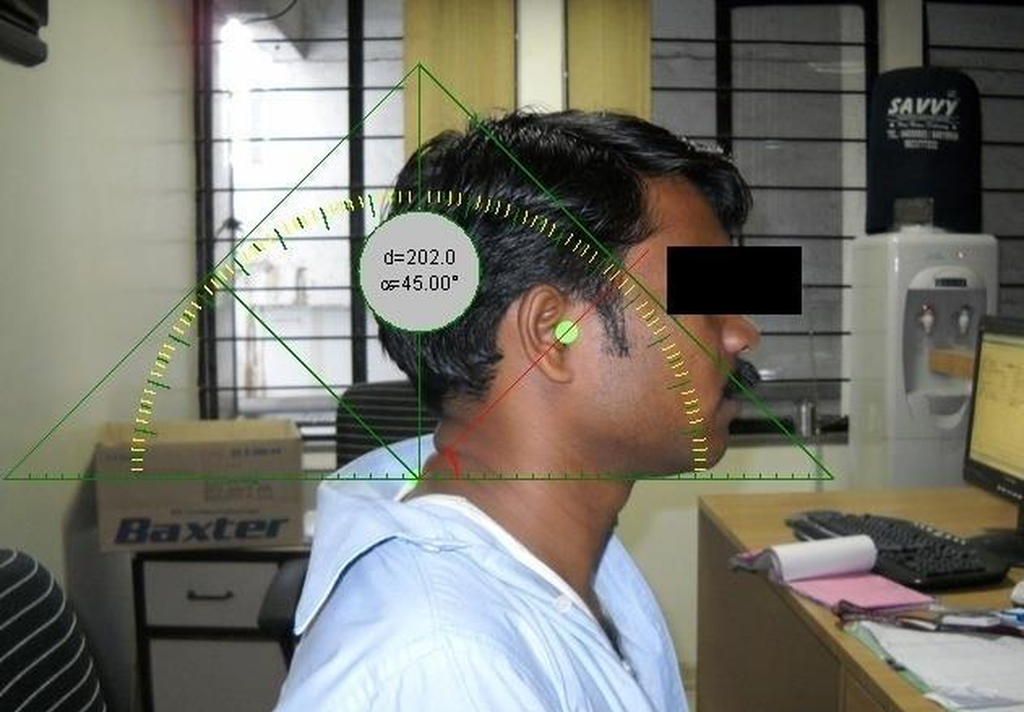
Fig. 1: Measurement of craniovertebral angle. Lateral-view photograph demonstrating measurement of the craniovertebral angle using anatomical landmarks.
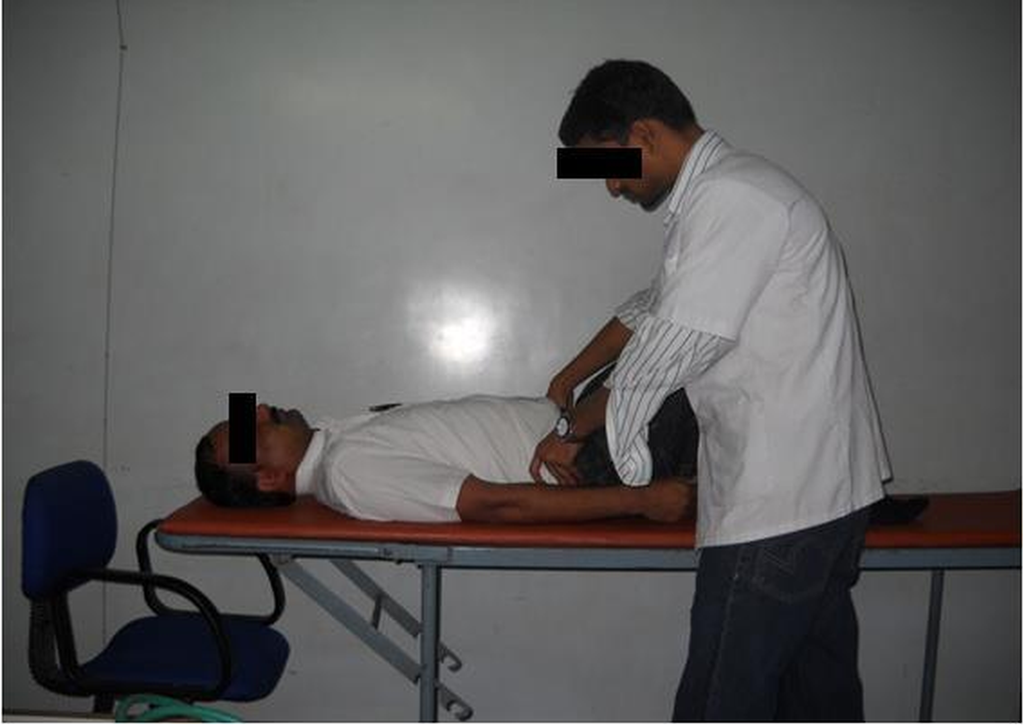
Fig. 2: Palpation of transversus abdominis. Demonstration of palpation during assessment of transversus abdominis activation.
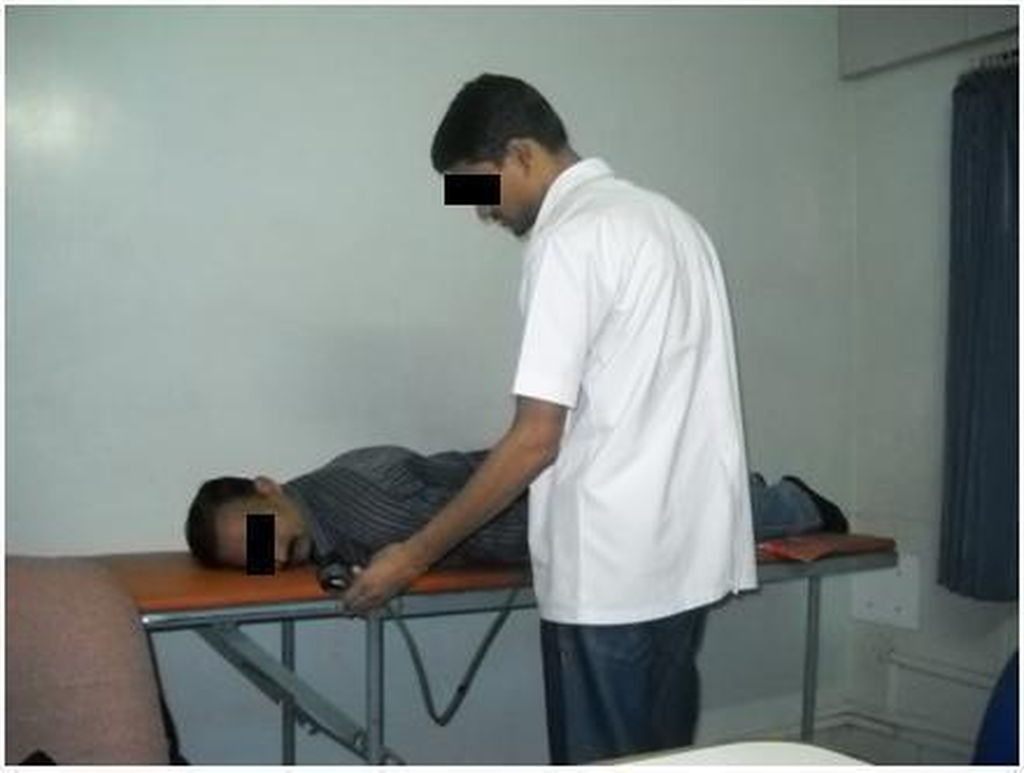
Fig. 3: Measurement of transversus abdominis strength. Demonstration of assessment using the pressure biofeedback unit.
RESULTS
Participant characteristics: A total of 200 computer users participated in the study, including 100 participants in the NHP group and 100 in the FHP group. Mean age was 25.79 ± 2.5 years in the NHP group and 26.34 ± 2.7 years in the FHP group. The NHP group included 56 males and 44 females, whereas the FHP group included 48 males and 52 females. (Table 2).
Table 2: Demographic characteristics of participants (N = 200).

Craniovertebral angle: The mean CV angle was 50.10 ± 2.87° in the NHP group and 40.68 ± 3.71° in the FHP group. The FHP group therefore had a smaller mean CV angle than the NHP group (p < 0.001; Table 3).
Table 3: Comparison of craniovertebral angle between groups.
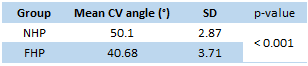
NHP, normal head posture; FHP, forward head posture.
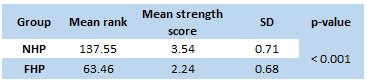
Transversus abdominis strength: Mean TrA strength was 3.54 ± 0.71 in the NHP group and 2.24 ± 0.68 in the FHP group. The original analysis reported a significant difference between groups (p < 0.001; Table 4).
Table 4: Comparison of transversus abdominis strength between groups.
Correlation between CV angle and TrA strength: Spearman correlation analysis showed a moderate positive correlation between CV angle and TrA strength (r = 0.603, p < 0.001; two-tailed; N = 200). Thus, lower CV angle values, indicating greater forward head posture, were associated with lower TrA strength scores.
Table 5: Correlation between craniovertebral angle and transversus abdominis strength.

DISCUSSION
The present study found a moderate positive correlation between CV angle and TrA strength among computer users. Participants classified as having FHP had a lower mean CV angle and lower mean TrA strength than participants with normal head posture.
The findings are consistent with the view that cervical and trunk posture may be functionally related. Caneiro et al. demonstrated that changes in thoracolumbar region during sitting posture can influence head and neck posture and cervicothoracic muscle activity [7]. In the present study, the association was observed between a cervical postural measure and a measure of deep abdominal muscle function.
The observed relationship is also consistent with findings from Kang et al., who reported a significant association between CV angle and TrA muscle thickness in individuals with forward head posture. [8] Although muscle thickness and strength are different outcomes, both findings suggest that assessment of the core trunk muscles may provide useful information when evaluating individuals with altered cervical posture.
Studies of computer work have also documented changes in head and neck posture associated with sustained sitting and work position. Szeto et al. reported differences in neck and shoulder posture among office workers [5]. Yoo and Park also examined neck and trunk kinematics and muscle activity during computer work [10]. These findings provide a relevant context for the present observation in computer users.
The current study has clinical relevance for physiotherapy assessment. A patient presenting with forward head posture may also demonstrate changes in trunk muscle performance. Assessment and treatment may therefore need to consider the cervical region together with trunk stabilization and work posture. However, the present cross-sectional design does not establish whether reduced TrA strength contributes to FHP, whether FHP contributes to reduced TrA strength, or whether both are influenced by other factors.
The study has several limitations. Body mass index, physical activity, and lumbar lordosis were not assessed. The study was cross-sectional, and the participants were computer users aged 20–30 years, which limits generalizability to other populations. In addition, the TrA assessment was based on a pressure biofeedback procedure and strength grading rather than direct electromyographic or ultrasound measurement.
CONCLUSIONS
Among the computer users studied, participants with forward head posture had lower craniovertebral angles and lower transversus abdominis strength than participants with normal head posture. A moderate positive correlation was observed between CV angle and TrA strength (r = 0.603, p < 0.001). The findings indicate that prolonged computer use and sustained sitting postures may lead to weakening of the lumbar stabilizing musculature, contributing to altered spinal alignment and postural dysfunction. These findings support considering trunk muscle function during physiotherapy assessment of forward head posture. The cross-sectional design, however, does not permit causal conclusions.
ABBREVIATIONS
CV: Craniovertebral; FHP: Forward head posture; NHP: Normal head posture; TrA: Transversus abdominis; SPSS: Statistical Package for the Social Sciences.
Competing interests: The authors declare that they have no competing interests.
Authors’ contributions
S.S.N.: conception and design of the study, data collection, data analysis and interpretation, preparation of the manuscript, and final approval of the manuscript. N.B.: supervision of the study, critical review of the manuscript, and final approval of the manuscript.
Acknowledgements
The authors acknowledge the participants who took part in the study and the staff who assisted with data collection. No external funding was received.
Cite this article: Sanket S. Nagrale, Nilima Bedekar. Correlation Between Forward Head Posture and Lumbar Core Strength in Computer Users: A Cross-Sectional Study. Int J Physiother Res. 2026;14(4):5025–5029. DOI: 10.16965/ijpr.2026.116
References
- Watson DH, Trott PH. Cervical headache: an investigation of natural head posture and upper cervical flexor muscle performance. Cephalalgia. 1993;13(4):272-84. https://doi.org/10.1046/j.1468-2982.1993.1304272.x PMid:8374943 PMCid:PMC10157175
- Falla DL, Jull GA, Hodges PW. Patients with neck pain demonstrate reduced electromyographic activity of the deep cervical flexor muscles during performance of the craniocervical flexion test. Spine (Phila Pa 1976). 2004;29(19):2108-14. https://doi.org/10.1097/01.brs.0000141170.89317.0e PMid:15454700
- Griegel-Morris P, Larson K, Mueller-Klaus K, Oatis CA. Incidence of common postural abnormalities in the cervical, shoulder, and thoracic regions and their association with pain in two age groups of healthy subjects. Phys Ther. 1992;72(6):425-31. https://doi.org/10.1093/ptj/72.6.425 PMid:1589462
- Harrison AL, Barry-Greb T, Wojtowicz G. Clinical measurement of head and shoulder posture variables. J Orthop Sports Phys Ther. 1996;23(6):353-61. https://doi.org/10.2519/jospt.1996.23.6.353 PMid:8727015
- Szeto GPY, Straker L, Raine S. A field comparison of neck and shoulder postures in symptomatic and asymptomatic office workers. Appl Ergon. 2002;33(1):75-84. https://doi.org/10.1016/S0003-6870(01)00043-6 PMid:11831210
- Marwaha RK, Kolke S. Effects of core stability training on computer professionals with cervical strain. Indian J Physiother Occup Ther. 2007;1(2):45-50.
- Caneiro JP, O'Sullivan P, Burnett A, Barach A, O'Neil D, Tveit O, Olafsdottir K. The influence of different sitting postures on head/neck posture and muscle activity. Man Ther. 2010;15(1):54-60. https://doi.org/10.1016/j.math.2009.06.002 PMid:19643658
- Kang KW, Kwon YH, Son SM. Ultrasound measurement of the transverse abdominis, internal oblique, and external oblique muscles associated with forward head posture and reduced cranio-vertebral angle. Med Sci Monit. 2021;27:e928987. https://doi.org/10.12659/MSM.928987
- Richardson C, Hodges PW, Hides J. Therapeutic exercise for lumbopelvic stabilization: a motor control approach for the treatment and prevention of low back pain. 2nd ed. Edinburgh: Churchill Livingstone; 2004.
- Yoo WG, Park SY. Effects of posture-related auditory cueing (PAC) program on muscle activities and kinematics of the neck and trunk during computer work. Work. 2015;50(2):187-91. https://doi.org/10.3233/WOR-131738 PMid:24004794