Effect of Combined Physiotherapy Exercise Programme on Pain and Menstrual Symptoms among Young Female Students with Primary Dysmenorrhea: A Pre–Post Experimental Study
Satheerthya Shaju , Julee Das · Int J Physiother Res 2026;14(4):5047–5053
1 Physiotherapy Intern, Kengal Hanumanthaiah Institute of Physiotherapy, Bengaluru, Karnataka, India.
2 Lecturer, Kengal Hanumanthaiah Institute of Physiotherapy, Bengaluru, Karnataka, India.
Corresponding Author: Dr.Julee Das, PT, Lecturer, Kengal Hanumanthaiah Institute of Physiotherapy, Nagarabhavi 2nd Stage, Bengaluru-560090, Karnataka, India. · juliedas143@gmail.com
Abstract
Background
Primary dysmenorrhea is a common cause of menstrual pain and may interfere with daily activities and academic participation. Exercise-based physiotherapy offers a non-pharmacological approach to symptom management. Objective: To determine the effect of a combined physiotherapy exercise programme consisting of stretching exercises, chair aerobics and Mitchell's relaxation technique on pain intensity and dysmenorrhea-related functional outcomes among college students with primary dysmenorrhea, and to assess the relationship between body mass index (BMI) and study outcomes.
Methods
A pre–post experimental study was conducted among female physiotherapy students aged 18 –25 years with primary dysmenorrhea. Thirty-nine participants were initially recruited; 30 completed the 21 -day intervention and were included in the final analysis. The intervention was given for 30 minutes per day, five days per week, for three weeks. Pain intensity and dysmenorrhea-related functional impact were assessed using the Visual Analogue Scale (VAS) and WaLIDD score. BMI was recorded. Paired t-tests compared pre- and post-intervention outcomes, and Pearson correlation assessed associations between BMI and study variables.
Results
Mean VAS decreased from 4.83 to 3.20, with a mean reduction of 1.50 ± 1.46 points (t = 5.642, p < 0.001). Mean WaLIDD decreased from 6.13 to 5.13, with a mean reduction of 0.97 ± 1.65 points (t = 3.209, p = 0.003). BMI was not significantly correlated with pre- or post-intervention VAS or WaLIDD scores (p > 0.05).
Conclusion
A 21-day combined programme of stretching exercises, chair aerobics and Mitchell's relaxation technique was associated with significant reductions in pain intensity and dysmenorrhea -related functional impact among college students with primary dysmenorrhea.
BACKGROUND
Primary dysmenorrhea is painful menstruation occurring in the absence of identifiable pelvic pathology. It is common among adolescents and young women and may be associated with lower abdominal pain, low back pain, radiating pain and other menstrual symptoms. The condition can interfere with daily activities, academic attendance and quality of life.
Although pharmacological treatment is widely used, non-pharmacological interventions such as therapeutic exercise and relaxation techniques are increasingly considered important components of symptom management. Exercise may influence pain through improved circulation, endogenous analgesic mechanisms, neuromodulation and reduction of muscle tension. A simple, low-cost and easily deliverable physiotherapy programme may therefore be relevant for young women in educational settings.
The WaLIDD score is a multidimensional tool assessing dysmenorrhea-related severity and functional impact through working ability, location of pain, pain intensity and duration. BMI has also been studied as a possible factor associated with dysmenorrhea, although the relationship remains inconsistent.
Objective: To determine the effect of a 21-day combined physiotherapy exercise programme comprising stretching exercises, chair aerobics and Mitchell’s relaxation technique on pain intensity and dysmenorrhea-related functional outcomes among college students with primary dysmenorrhea, and to assess the association between BMI and these outcomes.
MATERIALS AND METHODS
Study design and participants: A pre–post experimental study was conducted among female physiotherapy students meeting the inclusion criteria. Initially total 39 participants were recruited using purposive sampling. But, among 39 participants only 30 completed the intervention and were included in the final analysis.
Institutional Permission and Consent: Permission to conduct the study was obtained from the institutional head. Data were collected from students studying in the Institute after obtaining their consent to participate.
Inclusion criteria: Young female students aged 18–25 years experiencing pain during menstruation were included in the study.
Exclusion Criteria: Participants with diagnosed pelvic disease, previous pelvic surgery, or use of medications or non-pharmacological methods specifically for menstrual pain were excluded.
Outcome measures: Pain intensity was assessed using the Visual Analogue Scale (VAS), scored from 0 to 10. Dysmenorrhea-related severity and functional impact were assessed using the WaLIDD score, ranging from 0 to 12. BMI was calculated as weight in kilograms divided by height in metres squared.
Exercise Intervention protocol: The intervention was delivered over 21 days, five days per week, with three supervised physical sessions and two online sessions per week. Each 30-minute session consisted of 5 minutes of stretching-based warm-up, 15 minutes of low-intensity chair aerobics and 10 minutes of Mitchell’s relaxation technique.
Statistical analysis: Data were analysed using SPSS version 20. Descriptive statistics summarised participant characteristics and outcome scores. Paired t-tests compared pre- and post-intervention VAS and WaLIDD scores. Pearson correlation coefficients assessed associations between BMI and study outcomes. Statistical significance was set at p < 0.05.
INTERVENTION
The combined intervention consisted of stretching exercises, chair aerobics and Mitchell’s relaxation technique.
Protocol of the exercise intervention: The duration of the exercise extends for 21 days; 5 days per week, 3 days of physical sessions and 2 days of online sessions. The protocol has timing of 30 minutes per day. Starting with 5 minutes of warm up period, 15 minutes of low intensity exercise and 10 minutes of
cool down period. After each section rest for 5 to 10 seconds.
The warm up period
The 5 minutes of warm up periods include 4 different stretching exercises.
The first stretching exercise: The subjects were asked to stand and bend trunk forward from hip joint so that the shoulders and back were positioned on a straight line and the upper body was placed parallel to the floor for 5seconds hold and repetition for 10 times.
The second stretching exercise: the subjects were requested to stand then raise one heel off the floor, then repeat the exercise with the other heel alternatively. The exercise performed for 10 times. With hold of 5 seconds with each repetition.
The third stretching exercise: The subjects were asked to spread their feet shoulder width, place trunk and hands in forward stretching mode, then completely bend her knees and maintain a squatting position, duration of this position was 5 sec, the subject then raised her body and repeated the same movements 10 times.
The fourth stretching exercise: the subjects were asked to spread her feet wider that shoulder width. Then the subject was asked to bend and touch left ankle with her right hand while putting her left hand in a stretched position above her head so that the head was in middle and her head was turned and looked for her left hand, this exercise was repeated for the opposite foot with the same method. The exercises were repeated alternatively 10 times for each side of the body.
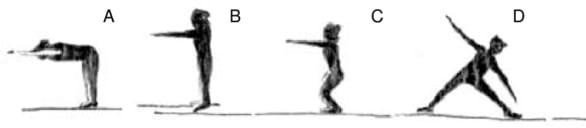
Fig. 1: stretching exercises: The second part of exercise protocol includes 5 different chair aerobics exercises with duration of 15 minutes. After each exercises rest for 5 to 10 seconds.This consisted of:
Knee lifts: the subject is asked to sit on a sturdy chair with feet flat on the floor and the back should be held straight. Raise one knee towards the chest, keeping the thigh parallel to the floor. Hold the raised position for a second or two and slowly lower the leg back to the starting position. Alternate the legs and repeat the action 30 times for each leg.
Diagonal toe touch: start by siting on the edge of the chair with legs wide with knee extended position. Reach the opposite hand over towards the opposite ankle hold it for a second and change to the opposite leg. Do this for alternate legs for 30 times each.
Flutter kicks: sit upright on the edge of a chair, ensuring the back is straight and your core is engaged. Place the hands on the sides of the chair for support if needed. Extend the leg out in front and alternate raising and lowering the legs in a quick controlled “flutter” motion. Throughout the exercise keep the core engaged and maintain a straight back. Repeat the action 30 times in each leg.
Criss crosses: sit upright on the on a chair, the back should be straight and core should be engaged. Hands behind your head with elbow wide, and alternate bring one knee up and across while twisting to meet opposite elbow. Repeat the action for 30 times for each leg.
Half jack: sit upright in the chair with the feet the knees together and arms hanging out to the side while simultaneously raising the one arm up out in the air above the head with extended elbow and the leg on same side extending sideways. Change the side and repeat. Do this action for 30 times each side.
The cool down period
The 10 minutes cool down period consist of the Mitchell Relaxation Technique. This helps to make the body and mind relaxed.

Fig. 2: Relaxation
The individual was asked to be comfortable lying position on a firm surface. The individual was fully supported and her body parts were relaxed as well as, there was no muscle tension. The mouth and eyes were gently kept close. The voice of instructor used during relaxation training was smooth and quiet. Gradually reduced in volume as session progressed. The individual was instructed to perform the following:
Dragging her jaw downwards inside her mouth. Then, stop the action and feel new position for 5sec and relax.
Pressing the tongue downwards in the mouth (the mouth should be kept closed). Then hold position for 5 sec and relax.
Close the eyes gently if they were opened, keeping her eyelids down, hold in new position and feel the action.
Push the head downwards against the bed, then hold position for 5 sec.
Pull the shoulders towards feet, feeling the space between the shoulders and ear, then hold the position for 5sec and then relax.
Sliding her elbows sideways away from her body until she reached a comfortable point. Then was asked to stop moving and feeling the space between her arms and body for 5 sec and relax.
Abduct and extend the fingers and thumb with palmar surface of both hands rested on the bed. Then hold the action for 5 sec and relax.
Breathing slowly and deeply without putting any effort into the breathing or any change in its rhythm.
Rolling the thighs outwards (external rotation). Stopping, letting the legs settled comfortably and hold the position for 5 sec.
Moving the knees until they are comfortable, adjusting their positions to enhance their comfort. hold the position
Plantar flexing her feet away from her face being their comfort. stopping and feeling the new position of her feet.
Push the body downwards against the bed. Stopping then, feeling her body weight being support. Hold the position for 5 sec and relax.
Relax body muscles, feel the facial muscles. Raise the eyebrows with eyes closed. Hold the position.
After completing the technique, the individual was instructed to slowly return to the active state gradually to avoid fainting. Then asked to open the eyes gently.
RESULTS
Thirty participants completed the intervention and were included in the final analysis. The mean age was 20.70 years and the mean BMI was 21.49 kg/m². Mean VAS decreased from 4.83 before intervention to 3.20 after intervention, while mean WaLIDD decreased from 6.13 to 5.13.
Table 1: Descriptive statistics of participants and primary outcomes.
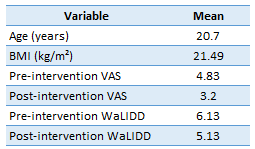
Table 2: Paired-samples comparison of pre- and post-intervention outcomes.
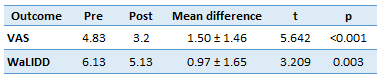
The paired t-test demonstrated a statistically significant reduction in VAS score after the intervention, with a mean reduction of 1.50 ± 1.46 points (95% CI 0.96–2.04; t = 5.642; p < 0.001). WaLIDD score also significantly decreased by 0.97 ± 1.65 points (95% CI 0.35–1.58; t = 3.209;p = 0.003).
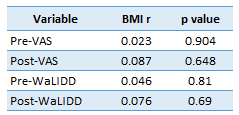
BMI was not significantly correlated with pre-intervention VAS (r = 0.023, p = 0.904), post-intervention VAS (r = 0.087, p = 0.648), pre-intervention WaLIDD (r = 0.046, p = 0.810) or post-intervention WaLIDD (r = 0.076, p = 0.690).
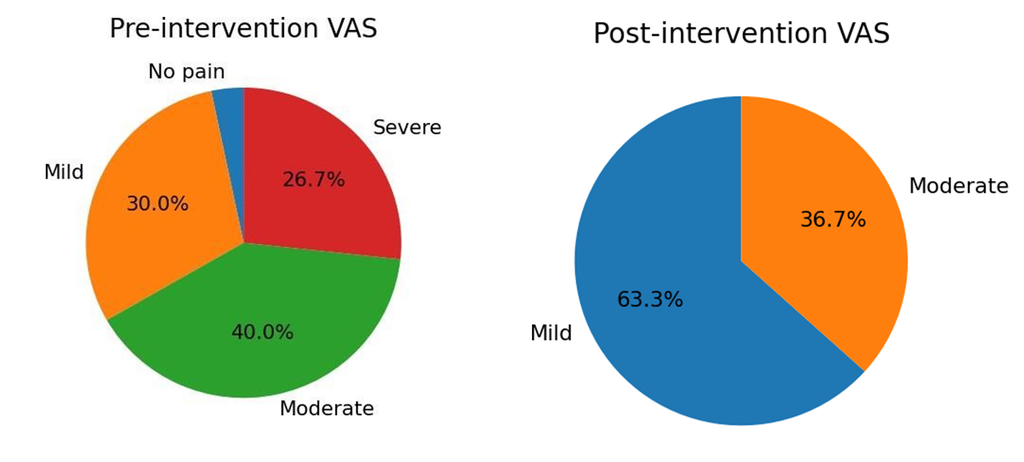
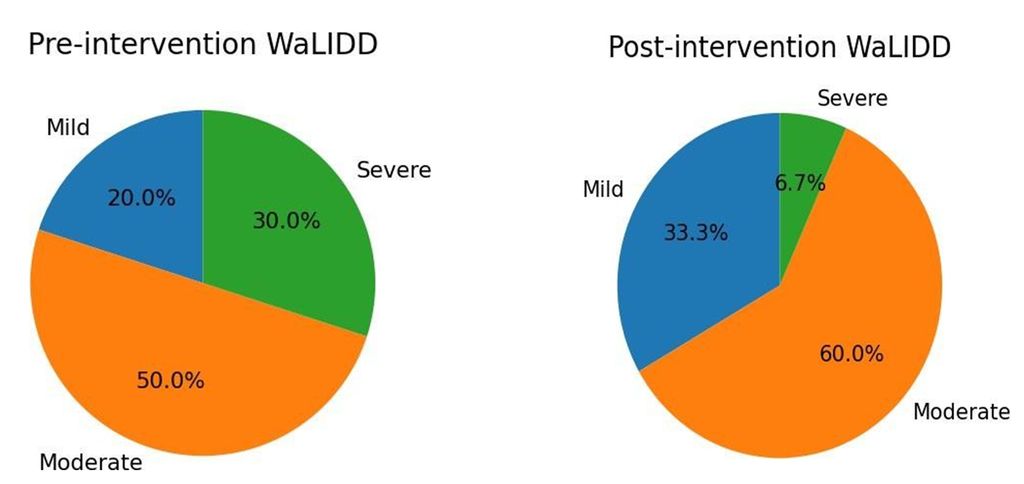
Graph 1: Pre- and post-intervention distribution of VAS and WaLIDD severity categories.
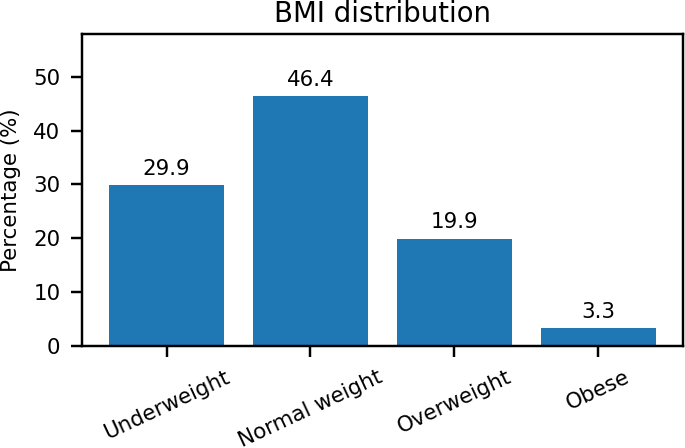
Graph. 2: BMI distribution of the 30 participants.
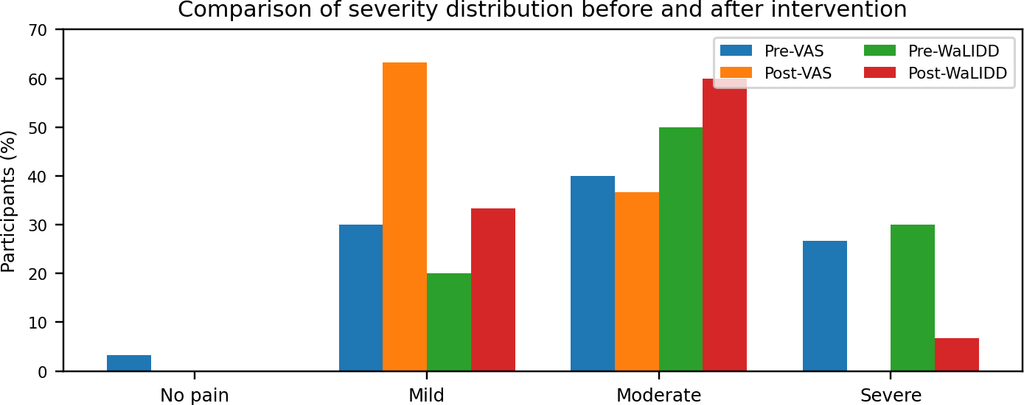
Graph 3: Comparison of severity distributions before and after the intervention.
Correlation Analysis
Table 3: Pearson correlations between BMI and study outcomes. No correlation reached statistical significance (p > 0.05).
DISCUSSION
This study found that a 21-day combined physiotherapy programme consisting of stretching exercises, chair aerobics and Mitchell’s relaxation technique was associated with significant reductions in pain intensity and dysmenorrhea-related functional impact. The mean VAS reduction of 1.50 points indicates improvement in subjective pain intensity, while the reduction in WaLIDD score suggests improvement in the overall burden of dysmenorrhea.
Stretching may reduce muscle tension and improve circulation, while aerobic activity may contribute to endogenous analgesic responses and increase pain tolerance. Chair-based aerobic exercise is practical because it requires minimal equipment. The relaxation component may provide additional benefit by reducing muscle tension and promoting a more relaxed physiological state.No significant association was identified between BMI and pain or dysmenorrhea-related functional outcomes.
Limitations: The study had a small sample size and used purposive sampling from a single educational setting. The absence of a control group, lack of blinding and short follow-up period limit the strength of causal conclusions. Five participants did not complete the intervention, and the final analysis included 30 participants.
CONCLUSION
A 21-day combined physiotherapy programme consisting of stretching exercises, chair aerobics and Mitchell’s relaxation technique was associated with statistically significant reductions in pain intensity and dysmenorrhea-related functional impact among college students with primary dysmenorrhea. BMI was not significantly associated with the measured outcomes. Larger controlled studies with longer follow up are recommended.
Future recommendations: In future research,larger sample size,diverse study settings and varied study population should be the point of consideration to improve the quality and robustness of the present research study.
Cite this article: Satheerthya Shaju, Julee Das. Effect of Combined Physiotherapy Exercise Programme on Pain and Menstrual Symptoms among Young Female Students with Primary Dysmenorrhea: A Pre–Post Experimental Study. Int J Physiother Res. 2026;14(4):5047–5053. DOI: 10.16965/ijpr.2026.150
References
- López-Liria R, Torres-Álamo L, Vega-Ramírez FA, García-Luengo AV, Aguilar-Parra JM, Trigueros-Ramos R, et al. Efficacy of physiotherapy treatment in primary dysmenorrhea: a systematic review and meta-analysis. Int J Environ Res Public Health. 2021;18(15):7832. https://doi.org/10.3390/ijerph18157832 PMid:34360122 PMCid:PMC8345570
- Zaid NSN, Muhamad AS, Kuan G, Zon EM. The effect of isometric exercise on the intensity and duration of pain among physically inactive young females with primary dysmenorrhea. J Phys Educ Sport. 2022;22(10):2777-2783. https://doi.org/10.7752/jpes.2022.11352
- McKenna KA, Fogleman CD. Dysmenorrhea. Am Fam Physician. 2021;104(2):164-170.
- Guimarães I, Póvoa AM. Primary dysmenorrhea: assessment and treatment. Rev Bras Ginecol Obstet. 2020;42(8):501-507. https://doi.org/10.1055/s-0040-1712131 PMid:32559803 PMCid:PMC10309238
- Iacovides S, Avidon I, Baker FC. What we know about primary dysmenorrhea today: a critical review. Hum Reprod Update. 2015;21(6):762-778. https://doi.org/10.1093/humupd/dmv039 PMid:26346058 PMCid:PMC10617534
- Barber MD. Contemporary views on female pelvic anatomy. Cleve Clin J Med. 2005;72(Suppl 4):S3-S11. https://doi.org/10.3949/ccjm.72.Suppl_4.S3 PMid:16435731
- Bteich F, Butt L, Abi Aarida R, et al. Prevalence, risk factors, and management practices of primary dysmenorrhea among young females. BMC Womens Health. 2021;21:276. https://doi.org/10.1186/s12905-021-01532-w PMid:34749716 PMCid:PMC8576974
- Itani R, Soubra L, Karout S, Rahme D, Karout L, Khojah HMJ. Primary dysmenorrhea: pathophysiology, diagnosis, and treatment updates. Korean J Fam Med. 2022;43(2):101-108. https://doi.org/10.4082/kjfm.21.0103 PMid:35320895 PMCid:PMC8943241
- Lillis C. What to know about secondary dysmenorrhea. Medical News Today. 2024 Oct 11. Medically reviewed by Valinda Riggins Nwadike, MD, MPH.
- Nagy H, Carlson K. Dysmenorrhea. In: StatPearls [Internet]. Treasure Island (FL): StatPearls Publishing; 2025 Jan-. Updated 2023 Nov 12.
- Berde SD, Yadav TS, Gosavi PM, Gijare SS. Effect of core strengthening exercises and chair aerobic exercises in primary dysmenorrhea. Int J Health Sci Res. 2019;9(3):77-82.
- Patel NS, Tanna T, Bhatt S. Effect of active stretching exercises on primary dysmenorrhea in college-going female students. Indian J Physiother Occup Ther. 2015;9(3):72-76. https://doi.org/10.5958/0973-5674.2015.00099.4
- Shahr-jerdy S, Shaikh Hosseini RS, Eivazi GME. Effects of stretching exercises on primary dysmenorrhea in adolescent girls. Biomed Hum Kinet. 2012;4(1):127-132. https://doi.org/10.2478/v10101-012-0024-y
- Physiopedia. Primary dysmenorrhea [Internet]. Physiopedia; [cited 2025 Oct 11].
- Kho KA, Shields JK. Diagnosis and management of primary dysmenorrhea. JAMA. 2020;323(3):268-269. https://doi.org/10.1001/jama.2019.16921 PMid:31855238
- Wu L, Zhang J, Tang J, Fang H. The relation between body mass index and primary dysmenorrhea: a systematic review and meta-analysis. Acta Obstet Gynecol Scand. 2022;101(12):1364-1373. https://doi.org/10.1111/aogs.14449 PMid:36124820 PMCid:PMC9812105
- Venkatesh D, Sudhakar HH. Textbook of Medical Physiology. 3rd ed. New Delhi: Wolters Kluwer; 2020.
- Chaurasia BD. Human Anatomy. 7th ed. New Delhi: CBS Publishers & Distributors; 2016.
- Donatelli RA. The anatomy of the core-muscle imbalance pathophysiology. In: Donatelli RA, editor. Sports-Specific Rehabilitation. 1st ed. St Louis (MO): Churchill Livingstone; 2007. p.135-144. https://doi.org/10.1016/B978-044306642-9.50012-5
- Aboualsoltani F, Bastani P, Khodaie L, Fazljou SM. Non-pharmacological treatments of primary dysmenorrhea: a systematic review. Arch Pharm Pract. 2020;11(1):136-142.
- Daniels SE, Paredes-Diaz A, An R, Centofanti R, Tajaddini A. Significant, long-lasting pain relief in primary dysmenorrhea with low-dose naproxen sodium compared with acetaminophen: a double-blind, randomized, single-dose, crossover study. Curr Med Res Opin. 2019;35(12):2139-2147. https://doi.org/10.1080/03007995.2019.1654987 PMid:31397597
- Schroll JB, Black AY, Farquhar C, Chen I. Combined oral contraceptive pill for primary dysmenorrhoea. Cochrane Database Syst Rev. 2023;7:CD002120. https://doi.org/10.1002/14651858.CD002120.pub4 PMid:37523477 PMCid:PMC10388393
- Nezamivand-Chegini S, Abedi P, Honarmandpour A, Namjouyan F, Yaralizadeh M, Ghanbari S. The effect of magnesium sulfate on pain intensity and menstrual blood loss in students with primary dysmenorrhea: a randomized controlled trial. J Inflamm Dis. 2022;26(3):115-122. doi:10.32598/JID.26.3.3. https://doi.org/10.32598/JID.26.3.3
- Sheth MS, Arora A, Rangey P, Vyas NJ. Physiotherapy in Obstetrics and Gynaecology: A Comprehensive Book on Women's Health. 1st ed. New Delhi: Jaypee Brothers Medical Publishers; 2023.
- Gerzson LR, Padilha JF, Braz MM, Gasparetto A. Physiotherapy in primary dysmenorrhea: literature review. Rev Dor. 2014;15(4):290-295. https://doi.org/10.5935/1806-0013.20140063
- Desai RG. Physiotherapy intervention for primary dysmenorrhea: a narrative review. Int J Res Rev. 2022;9(3):441-449. https://doi.org/10.52403/ijrr.20220349
- Igwea SE, Tabansi-Ochuogu CS, Abaraogu UO. TENS and heat therapy for pain relief and quality of life improvement in individuals with primary dysmenorrhea: a systematic review. Complement Ther Clin Pract. 2016;24:86-91. https://doi.org/10.1016/j.ctcp.2016.05.001 PMid:27502806
- Rodrigues JC, de Arruda GT, de Moraes PC, Firão CB, Ávila MA, Driusso P. Self-management of primary dysmenorrhea-related pain: cross-sectional study on non-pharmacological interventions. Pain Manag. 2024;14(5-6):265-272. https://doi.org/10.1080/17581869.2024.2376519 PMid:39041620 PMCid:PMC11340746
- Abbaspour Z, Rostami M, Najjar S. The effect of exercise on primary dysmenorrhea. J Res Health Sci. 2004;4(2):26-31.
- Rafique N, Al-Sheikh MH. Prevalence of primary dysmenorrhea and its relationship with body mass index. J Obstet Gynaecol Res. 2018;44(9):1773-1778. https://doi.org/10.1111/jog.13697 PMid:29974566
- Polat A, Celik H, Gurates B, Kaya D, Nalbant M, Kavak E. Prevalence of primary dysmenorrhea in young adult female university students. Arch Gynecol Obstet. 2009;279(4):527-532. https://doi.org/10.1007/s00404-008-0750-0 PMid:18726608
- Davis AR, Westhoff CL. Primary dysmenorrhea in adolescent girls and treatment with oral contraceptives. J Pediatr Adolesc Gynecol. 2001;14(1):3-8. https://doi.org/10.1016/S1083-3188(00)00076-0 PMid:11358700
- Ferries-Rowe E, Corey E, Archer JS. Primary dysmenorrhea: diagnosis and therapy. Obstet Gynecol. 2020;136(5):1047-1058. https://doi.org/10.1097/AOG.0000000000004096 PMid:33030880
- Thakur P, Pathania AR. Relief of dysmenorrhea: a review of different types of pharmacological and non-pharmacological treatments. Mater Today Proc. 2022;48(Pt 5):1157-1162. https://doi.org/10.1016/j.matpr.2021.08.207
- Teherán AA, Piñeros LG, Pulido F, Mejía Guatibonza MC. WaLIDD score, a new tool to diagnose dysmenorrhea and predict medical leave in university students. Int J Womens Health. 2018;10:35-45. https://doi.org/10.2147/IJWH.S143510 PMid:29398923 PMCid:PMC5775738
- Zierle-Ghosh A, Jan A. Physiology, body mass index. In: StatPearls [Internet]. Treasure Island (FL): StatPearls Publishing; 2025 Jan-. Updated 2023 Nov 5.